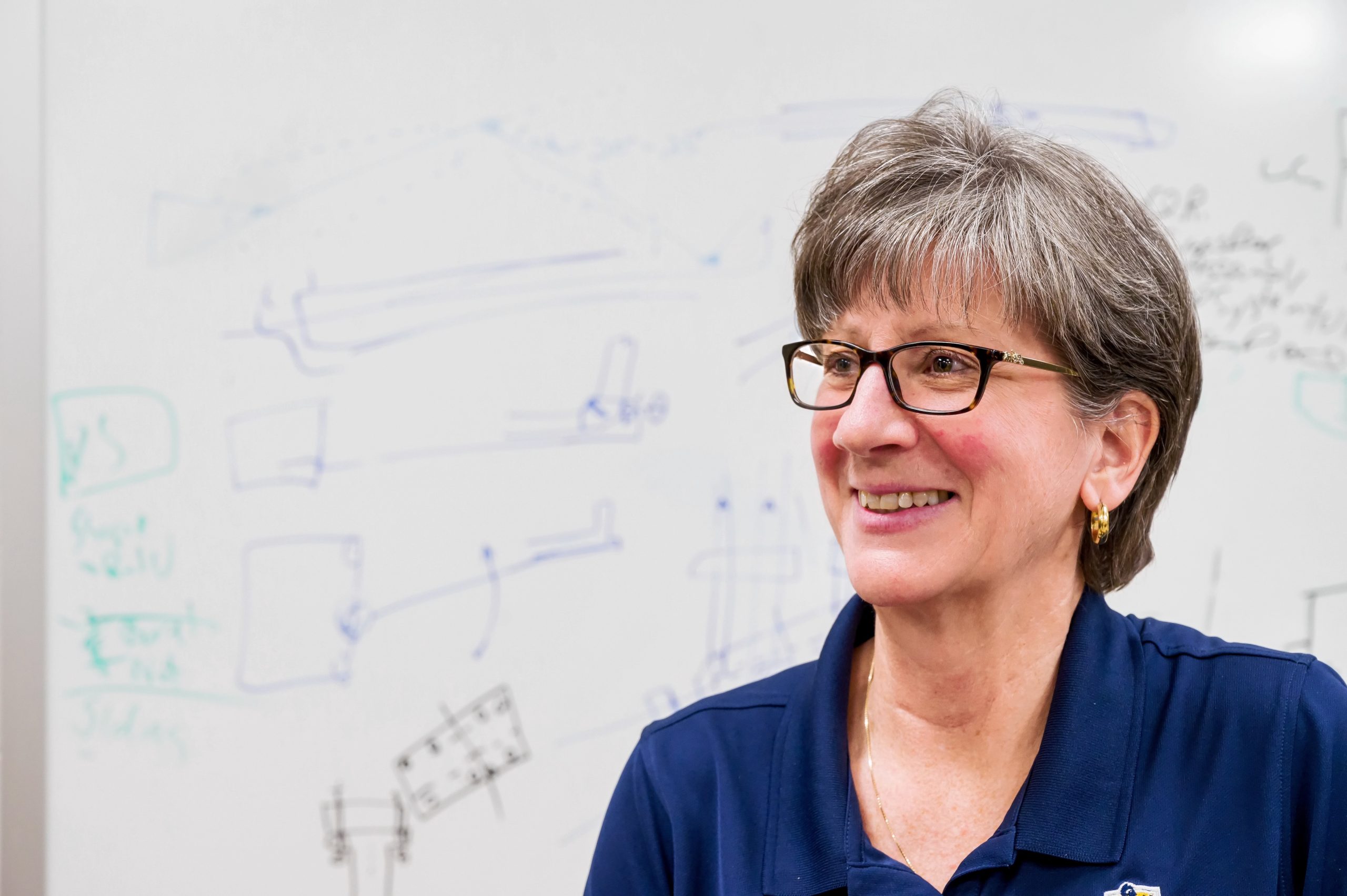
Kinesiology Students, Professor Study Benefits Of Exercise And Aging
Posted on April 29, 2025
We think that if that (protein) is released in response to exercise, and we exercise consistently, then we’re going to have higher levels of BDNF (a protein) that could result in some protective effects.
Chad Wessinger, Kinesiology doctoral student working on iSTEP (Inspiring Seniors Through Exercise Promotion)
Kinesiology Chair’s Research Reveals Impact of Exercise on the Brain
Posted on March 07, 2025
A study conducted by Kinesiology Chair Jenny Etnier and National Taiwan Normal University Professor Chang Yu-Kai reveals acute exercise can boost cognitive function by up to 10%, regardless of age.
Attribution: Study published in Psychological Bulletin
For 50 years, members of UNCG’s Physical Education class of 1975 held onto coursework notes, textbooks from their time at the University, old uniforms and jackets, and photos showing them with their classmates.
They recently gathered at the University to be inducted into the UNCG Vanguard Society and shared some of what made their class special.
“When I got here, I realized I was in a class of superstars and I had to keep up,” said Vicki Simmons, alumna and archivist for the class. “Every one of us turned out to be success stories.”
Members of this class not only succeeded in their careers connected to physical education and kinesiology, but decided to help others interested in those fields.
(Dr.) Kathy Williams was the associate dean and encouraged us to think about how we could add impacT
Paula Bonner, Alumna
In 1990 they decided to not just honor their class, but future UNCG scholars.
The class started making contributions for a scholarship, and created what is now the Hielscher Scholar program. It’s named for former physical education professor and class advisor, Pat Hielscher. The scholarship was initially designed to help one student a year with their tuition. The Class of ‘75 has grown its endowment, and now they are able to help three students annually.
The scholarship is awarded to one new student each year to someone who will make an impact in the field of kinesiology. The Class of ’75 said they wanted to not only award scholarships to students, but maintain a connection with them. This includes meeting with the students annually and forging connections.
“We wanted to make an investment in our future,” said alumna Cathy Tamsberg. “It’s exciting to see these young people who we are able to support and carry on Pat’s name.”
Memories preserved from the Class of 1975
Scholarship recipients have included Janiah Lindsey, from Lilesville, N.C., who is now coaching a middle school soccer team and wants to earn a M.S. in Athletic Training; Elizabeth “Liz” Romero, from Fayetteville, N.C., who is graduating this year and plans to be a physical therapist; Raven Ross, from Iron Station, N.C., who wants to be a physical therapist; and Emmy Therassant, from Burgaw, N.C., who hopes to be a strength and conditioning coach.
“I appreciate you all genuinely wanting to meet your scholars,” Ross said to the alumnae. “It’s inspiring to see you all continue to meet, laugh, and have fun.”
Hielscher, who attended the reunion, said the bonds the women in this class created are special.
“We shared four years together, but we kept sharing. We learned, we grew, we were challenged, we had fun, we suffered, we had hard days, but we made it,” she said. “(Your professors) are so proud of each of you. You followed your passions. You have bloomed where you were planted and dared to be different. I didn’t know how lucky I was to be your class advisor.”
School of Health and Human Sciences Dean Carl Mattacola said he has learned from this class, who regularly meets on Zoom and still distributes an annual newsletter.
You all have taught me the power of connection and long-term relationships
Dean Carl Mattacola, about the Class of 75′
Alumna Betsy Blee said their class is special because they were trailblazers for women at the time.
“The 1970s was so important to women in sports, especially with Title IX,” she said, reference the federal law created in 1972 that prohibits sex-based discrimination in educational programs that receive federal funds.
Current Department of Kinesiology Chair Dr. Jenny Etnier said the department continues to strive to be as impactful and meaningful as it was when the Class of 1975 was at UNCG. She cited the dedication of the faculty, new programs that have started in the last few years, and that the department is consistently ranked tops in the country.
Brian Sutton Helps Launch New Journal in Sport & Exercise
Posted on April 02, 2025
Dr. Brian Sutton, a 2024 graduate, has achieved a milestone in his career. As a 20-year veteran in the field of sport and fitness, Brian recently played a key role in the launch of the National Academy of Sports Medicine’s (NASM) new journal.
The Journal of Fitness, Wellness, and Human Performance is now the official journal of NASM. As Senior Content Manager for NASM and co-editor of the journal, Brian is involved in the review and acceptance of article submissions. The journal accepts original research, systematic reviews, meta-analyses, case studies, narrative reviews, and practical applications called “tips from the field” from a wide range of areas within the realm of sports medicine, such as nutrition, strength and conditioning, physical therapy, and sports psychology.
Brian feels the EdD in Kinesiology program helped prepare him to serve as the managing editor. It helped him to strengthen his research, collaboration, management, and editorial skills through courses like program design and the dissertation process in which students regularly engaged in editorial-like activities as part of their peer review. Training during the program also included sessions on predatory journals, which helped him to understand how to properly structure the journal.
Brian is proud of the launch and wants to extend an invitation to new writers to submit an article to NASM’s new journal. We all would like to applaud Brian on his accomplishments with NASM and wish him the best of luck going forward!
Visit our website to learn how the EdD in KIN program can help advance your career.
Kinesiology Professor Recipient of UNCG Research Mentor Award
Posted on March 18, 2025
Maher is the early career research excellence winner for her work on the psychology of physical activity. Her research adopts a dual process lens, which recognizes physical activity is rooted in both a person’s conscious decisions and unconscious actions. She studies behavior in real-time by utilizing innovative approaches, such as wearable and mobile technologies, that allow her to capture nuances of everyday life that can influence physical activity.
My approach to undergraduate research and teaching heavily emphasizes learning while prioritizing inclusion. It is important to me that all undergraduate students become comfortable engaging with scientific research because, as future health professionals, they will need to be able to review and evaluate the literature to inform their own evidence-based practice.
EdD in KIN Hosts Students & Alumni During Basketball Game
Posted on March 03, 2025
On February 8, the EdD in KIN partnered with the HHS Alumni Association for a basketball social at the First Horizon Coliseum, formerly the Greensboro Coliseum. Students, alumni, and family members were able to connect and network during the event. The time was spent enjoying food, fun, and fellowship as students and alumni helped cheer the UNCG men’s basketball team to a 74 – 70 victory against Western Carolina.
Learn more about the EdD in KIN program at UNCG on our website .
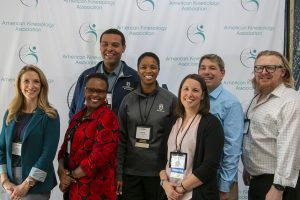
At the American Kinesiology Association’s (AKA) 18th Annual Leadership Workshop in Newport Beach California, Drs. DeAnne Brooks, Michael Hemphill, and Erin Reifsteck received the AKA Inclusive Excellence Award on behalf of the Department of Kinesiology at UNCG.
The AKA Inclusive Excellence Award is based on an organization’s commitment to inclusive excellence by promoting an understanding of diversity and inclusion, developing innovation programs and initiatives, sustaining a commitment to develop diversity and inclusion, and demonstrating support of underrepresented and/or marginalized individuals.
The Department of Kinesiology at UNCG was unanimously selected because it “stands as a beacon of excellence in higher education, demonstrating exceptional leadership in advancing diversity, equity, and inclusion through innovative programming, distinguished scholarship, and impactful community engagement.” The AKA Diversity, Excellence, and Inclusion Committee highlighted the department’s commitment to fostering an inclusive environment is found in the academic initiatives, efforts to transform the campus community and the field of Kinesiology, and that the department’s comprehensive approach “serves as an exemplary model for academic units across higher education.” Dr. Brooks states that she is “really happy that we were a part of a department that has goals for inclusive excellence.”
Furthermore, Drs. Brooks and Reifsteck were inducted into the AKA Leadership Institute Class of 2026 – Cohort 7 during the AKA Leadership Workshop. The Leadership Institute is designed to help individuals advance their careers and continue to develop professionally in the field of Kinesiology. Through their experiences and mentorship, Drs. Brooks and Reifsteck hope to add value to UNCG in their current roles and in the future.
Learn more about the EdD in KIN program at UNCG on our website .
UNCG Ed.D. Students & Alumni Represent at the NAKHE Conference
Posted on February 25, 2025
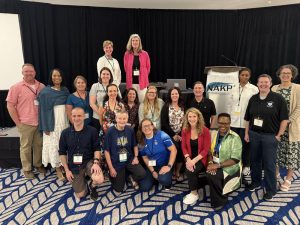
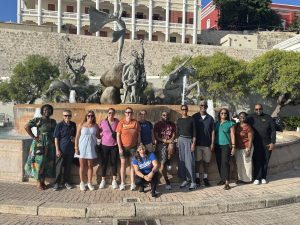
In January, twenty-five of UNCG’s students, alumni, and faculty attended the 2025 National Association for Kinesiology in Higher Education (NAKHE) Conference in Puerto Rico as presenters, panelists, awardees, and more. It was like a UNCG Kinesiology family reunion. In addition to time at the conference, there was time to explore the island and enjoy the local food and traditions – we even had our own hometown tour guide (thanks, Taisha).
Hear from current students and alumni about their experience at the conference:
Amanda Aguilar, 2017 EdD Cohort, 2021 Alum
During the NAHKE conference, Amanda participated in three presentations. Amanda says presenting with fellow UNCG alumni, faculty, and students was a rewarding experience, and that “it is always special to share your research and accomplishments with a group that you share a bond with.” She credits Drs. Brown and Gill for doing an amazing job of connecting everyone from various programs, years, and roles. Amanda appreciates that the NAHKE conference allows her to reconnect yearly with mentors, colleagues, and friends in a fun, relaxing yet professional setting. Amanda looks forward to attending the conference every year, and leaves feeling energized and ready to start a new semester.
Jason Suby, 2015 EdD Cohort, 2019 Alum
Jason acknowledges that his attendance at the NAHKE conference has significantly contributed to his professional development in a multitude of ways. He notes that the diverse range of presentations and workshops have exposed him to cutting-edge research and innovative teaching practices in Kinesiology which has broadened his understanding of the field and provided new ideas to implement in his work. The NAHKE conference offers invaluable networking opportunities and allows attendees to connect with leading experts, researchers, and educators. Additionally, Jason says his attendance at the conference has enhanced his professional skills by encouraging him to engage in discussions, present his work, and critically evaluate the research of others. Jason states that “this experience has undoubtedly strengthened my ability to contribute meaningfully to the field of kinesiology.”
Mona Flynn, 2020 EdD Cohort, 2024 Alum
As a first-time NAKHE attendee, Mona says the conference is an invaluable as it offers more than just a platform to showcase research – it fosters leadership development and forward-thinking approaches in Kinesiology. Mona, a recent graduate of the EdD in KIN program, had the opportunity to serve on a panel with her professors and fellow alumni, as well as present her research poster. These experiences reinforced the importance of mentorship, collaboration, and lifelong engagement in the field. Mona states the keynote presentations highlighted the importance of developing “inclusive” practices, both personally and professionally. She says, “the conference exemplified how higher education in kinesiology can shape not only scholarly contributions but also visionary leaders who will drive the profession forward.” During her time at the conference, Mona enjoyed connecting with her EdD KIN mentor, Pam Brown, and a tour of the warmth and beauty of the island led by Taisha Hernández Zambrana, a member of the 2024 Cohort.
Taisha Hernández Zambrana, 2024 EdD Cohort
A current EdD in KIN student and first-time NAHKE attendee, Taisha states the conference was the most invaluable professional experience she has ever had. She was amazed by the willingness of many scholars to share their knowledge and experience with humility. Taisha says she is “grateful for every interaction and relationship built with scholars who deeply exemplify leadership, commitment, and genuine passion for the field of Kinesiology.” As a presenter alongside UNCG alumni and faculty, Taisha says it was a rewarding experience and felt the support and mentorship from each person. The conference helped Taisha to develop new ideas and research ideas for her dissertation. Taisha is grateful that this experience was in her homeland of Puerto Rico, and loved the opportunity to share her island, language, and culture with the many conference attendees.
Members of the UNCG Kinesiology family in attendance include Amanda, Jason, Mona, Taisha, Tara, Jerono, DeAnne, David, Craig, Heather, Callie, Ashley, Lindsey, Amy, Beverly, Susan, Teri, Marcus, Enid, Mairym, Erin, Jackie, Adam, Diane, and Pam. We look forward to seeing everyone again at next year’s NAKHE Conference in Nashville, TN.
Learn more about the EdD in KIN program at UNCG on our website .
Kinesiology Professor Obtains Patent for Device to help with ACL Injuries
Posted on February 28, 2025
We have a prototype and are seeking funding to develop a more commercial-ready model, which would connect to a computer to measure and graph the results of the laxity tests.
Dr. Sandra Shultz, Kinesiology professor and Director of the Center for Women’s Health and Wellness