In May 2024, the graduating class of the Doctor of Education in Kinesiology program presented their doctoral research to their peers, Kinesiology faculty members, and others during the Dissertation Showcase. The students designed the visual abstracts to share their findings and the implications of the work with the community to help others use the findings in their own settings.
Click the images to see larger versions of the infographics and use the links provided to read more about these exciting research projects!
Katie Baur
Weight Training Practices and Perspectives among Cadet Women at a Senior Military College
Understanding Water: Values, Viewpoints and Behaviors that Influence Swimming Participation in Watsonville, CA.
Abstract coming soon
Kara Schwab
Sports Participation as Protective Factors in Student-Athletes that have Attended Sherman Indian High School, an American Indian Off-Reservation Boarding School
Fall 2025 Open House Events for KIN Graduate Programs
Posted on September 23, 2025
You’re invited! UNCG Kinesiology is holding in-person and virtual open house events in October and November for prospective students to learn more about our many graduate programs.
Dr. Sam DuBois, a dedicated member of the Physical Activity and Cognition Lab, recently earned her Ph.D. in Kinesiology under the mentorship of Dr. Jenny Etnier. Dr. DuBois has been an invaluable asset to the lab, recognized by research participants for her kindness, admired by classmates for her reliability, and respected by faculty for her intelligence.
In her final year of graduate studies, Dr. DuBois undertook her dissertation—a comprehensive research project based on her own questions. This accomplishment involved designing and conducting her own study, authoring a 50,000-word paper, and successfully defending her work in an oral examination.
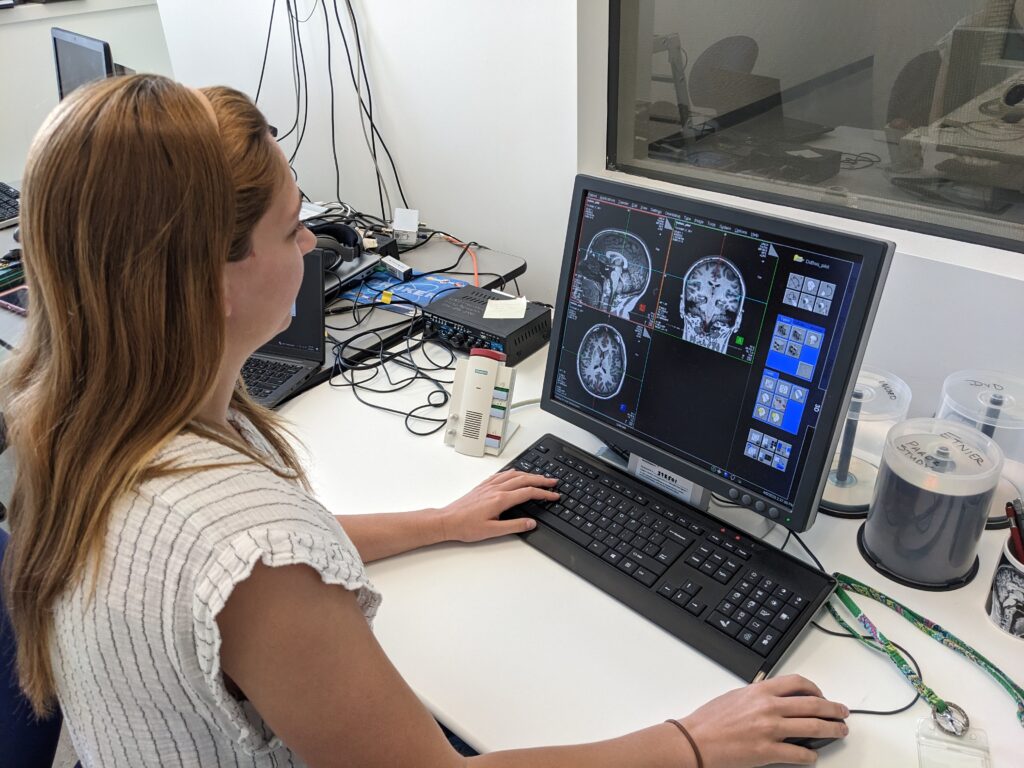
Dr. DuBois’s dissertation, titled “Acute Exercise and Pattern Separation-Dependent Mnemonic Discrimination in Older Adults: An fMRI Investigation,” investigates the effects of moderate-intensity exercise on the mnemonic discrimination performance and brain-wide activity of older adults. Below, Dr. DuBois explains key terms from her title, discusses the significance of this research, and shares her study’s findings.
Definition of Terms
Acute Exercise: A single session of exercise.
Mnemonic Discrimination: Episodic memory is a type of memory that involves the recollection of personal experiences or events, including the time and place they occurred, such as remembering details of your wedding day. Mnemonic [ni-mon-ik] discrimination is a crucial component of episodic memory that allows us to differentiate a current event from memories of similar past events.
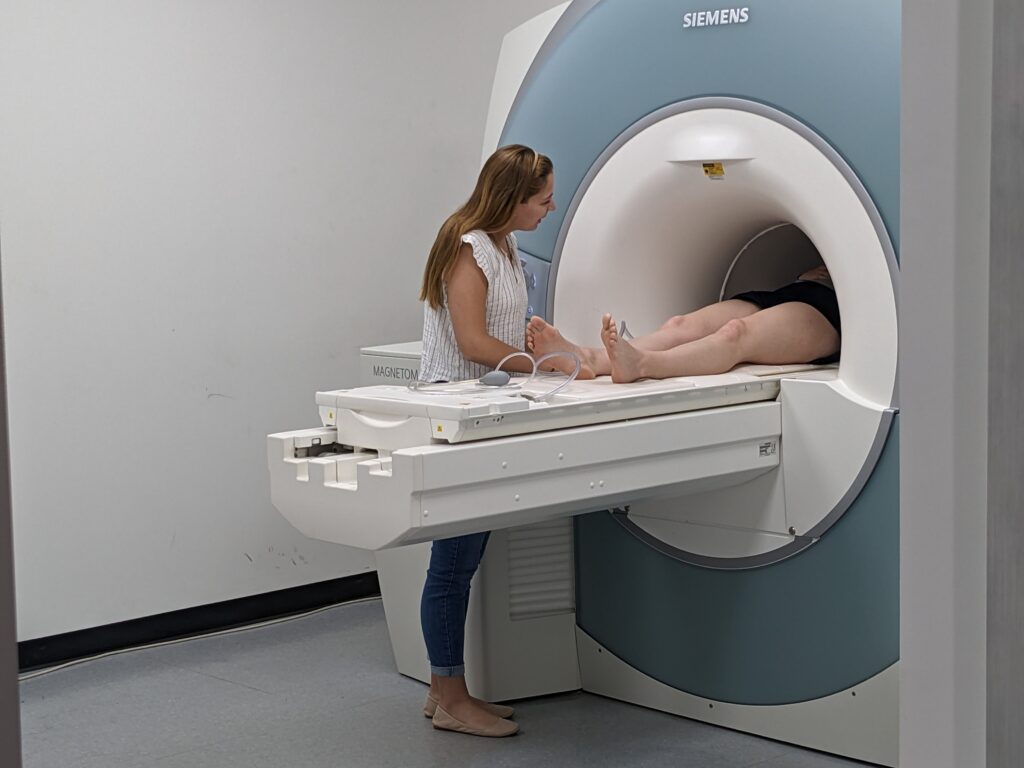
fMRI: fMRI stands for ‘functional magnetic resonance imaging’ or ‘functional MRI’. This type of MRI scan can show which areas of the brain are most active.
Importance of Study
As people age, mnemonic discrimination declines. This makes older adults more likely to misremember details of routine events, such as taking medication or recalling where they parked. Therefore, effective strategies to reduce the severity of age-related declines in mnemonic discrimination are needed to support the daily functioning of older adults.
Physical activity has been shown as a lifestyle factor that can benefit cognitive function in older adults, helping to protect brain regions that facilitate the neural processes that underlie mnemonic discrimination. However, research using precisely designed mnemonic discrimination tasks sensitive to these age-related changes remains limited.
Since the rapid physiological responses to a single session of exercise (acute exercise) may accumulate over time to create long-term brain and cognitive changes, acute exercise studies that use mnemonic discrimination tasks are ideal. They can address the existing gap in the literature and guide the development of chronic exercise programs aimed at age-related declines in mnemonic discrimination.
Thus, the current study included 26 physically active, older adults (average age = 65.5) who attended 2 lab visits approximately 1 week apart.
Completed a mnemonic discrimination task during a functional MRI scan after seated rest (20 minutes of resting while sitting on a stationary bike)
Completed a mnemonic discrimination task during a functional MRI after acute exercise (20 minutes of moderate-intensity aerobic exercise riding a stationary bike)
Results and Findings
Results showed that performance on the mnemonic discrimination task following acute exercise and seated rest did not significantly differ. However, functional MRI scans showed that brain activity in specific regions was reduced following acute exercise compared to seated rest. Specifically, during task trials that required mnemonic discrimination, where participants viewed lure objects that were similar to previously seen objects, brain activity in regions of the ventral visual cortex that are important to episodic memory was reduced following acute exercise compared to seated rest.
These results suggest that although acute exercise (a single session of moderate-intensity exercise) may not enhance behavioral mnemonic discrimination in older adults, it can improve neural efficiency in ventral visual regions as fewer neural resources are needed to maintain the level of mnemonic discrimination performance. Thus, acute exercise may induce short-term, beneficial changes in the function of brain regions that support mnemonic discrimination.
Future research is needed to understand how acute exercise-induced change in the function of ventral visual regions may relate to changes in brain function and mnemonic discrimination performance of older adults after chronic exercise interventions.
Dr. DuBois’s work adds to a growing body of research on the benefits of physical activity for cognitive health in aging, highlighting how even a single session of exercise can positively influence neural efficiency in older adults. While her findings indicate that acute exercise may not immediately enhance mnemonic discrimination performance, the reduced neural activity in key brain regions suggests that exercise may support cognitive function by requiring fewer resources to achieve the same level of performance.
Dr. DuBois completed her dissertation and graduated from the UNC Greensboro Department of Kinesiology in May 2024. She is currently an Assistant Professor in the Department of Public Health and Exercise Science at Appalachian State University. If you have any questions about her research, you may contact her by email at duboissl1@appstate.edu.
Congratulations to Dr. Dyson on Becoming a 2024 National Academy of Kinesiology Fellow
Posted on October 10, 2024
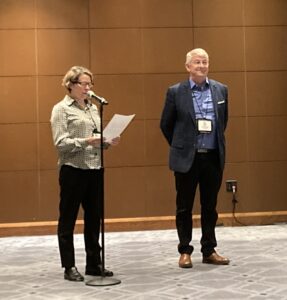
Dr. Dyson provides the New Fellows’ response.
On September 28, Dr. Ben Dyson was inducted into the National Academy of Kinesiology (NAK) as 2024 Fellow. The NAK is a prestigious organization with 100 years of rich history contributing to the area of Physical Education and the discipline of Kinesiology.
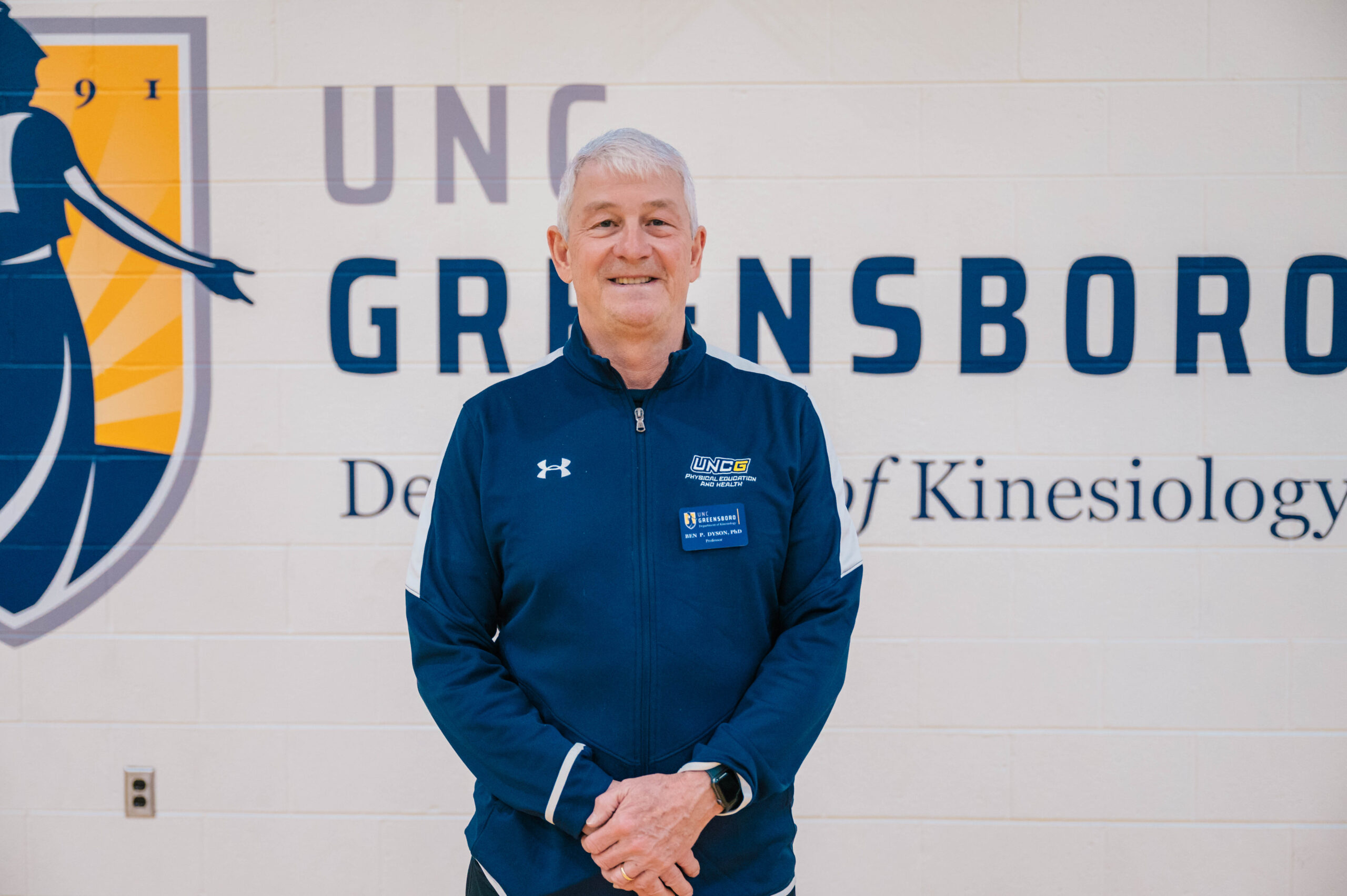
Dr. Dyson is a Professor in the Department of Kinesiology at the University of North Carolina at Greensboro. He is an internationally recognized scholar in Health and Physical Education in the areas of innovative curriculum and pedagogy, Cooperative Learning (CL) as a pedagogical practice, and scholarship in Social and Emotional Learning. Currently, he is partnering with Guilford County School teachers and students on his research. Dr. Dyson has taught at McGill University in Montreal, Canada, the University of New Hampshire, the University of Memphis, and the University of Auckland, New Zealand. Dr. Dyson has presented at 120 national and international conferences and has published over 100 refereed research articles, editorials, book chapters, and books. He was the Scholar Lecture for SIG 93 at the American Education Research Association in 2023. Dr. Dyson was inducted as Fellow number 648 to the National Academy of Kinesiology in September.
By reflecting on his accomplishment, Dr. Dyson states, “I was honored to become Fellow number 648 in the National Academy of Kinesiology. I was fortunate to be nominated to provide a brief response on behalf of the new Fellows at the Banquet dinner. These new fellows represent an extremely talented and highly engaged group of academics and world class scholars. These Professors will no doubt continue to contribute to the field of Kinesiology in an impressive manner.”
Dr. Jennifer Etnier describes Dr. Dyson’s numerous accomplishments.
Dr. Etnier, Dr. Dyson, and Dr. Sam Hodge (NAK President)
Dr. Dyson described the occasion as “a highly productive networking and learning experience” where he was able to meet the 15 new Fellows along with a wide range of scholars from many different disciplines in Kinesiology.
Spooky But Safe: A Caregiver’s Guide to Halloween with Dementia
Posted on October 31, 2024
PAC Lab Article Written By Brittany Armstrong
Halloween can be full of spooky fun, but it might also bring challenges if you’re caring for someone with dementia. With some planning and kindness, you can help them stay calm and comfortable on this festive night.
Keep the Routine People with dementia feel safest when things are familiar. Try to keep the day as normal as possible by sticking to the usual schedule. Doing normal activities can help reduce confusion, especially if there are decorations or costumes around.
Limit Scary Surprises Scary costumes, fake cobwebs, and spooky sounds might feel fun to us, but to someone with dementia, they can be upsetting or confusing. Try to keep Halloween decorations friendly and avoid scary masks or flashing lights.
Handle Trick-or-Treaters with Care If lots of doorbell ringing could cause anxiety, think about turning off your porch light and putting up a “No Trick-or-Treaters, Please” sign. This can help keep the home quiet and peaceful. Another option is to sit together by the door, giving out candy together. This lets you keep an eye on things and even make trick-or-treating a friendly, shared experience.
Offer a Calm Space If things get overwhelming, it’s helpful to have a quiet room where your loved one can rest. You might play soothing music or a favorite TV show. If it’s too noisy outside, consider closing the blinds and turning off outdoor lights.
Enjoy Simple Halloween Fun Together Not all Halloween traditions have to be intense! You could carve a pumpkin, bake Halloween cookies, or even watch a funny Halloween show together like “Bewitched” or “The Addams Family” reruns. These activities can create happy memories without too much stimulation.
Halloween can be enjoyable for everyone with a little thoughtfulness and planning. Taking steps to keep things calm and cozy can help your loved one feel safe and included in the celebration.
Kinesiology Professor Dr. Ben Dyson and former Ph.D. Student Yu Kai Chang were recently inducted as Fellows into the National Academy of Kinesiology (NAK). Fellows are nominated by their peer fellows, evaluated by a membership committee according to criteria set forth in the Academy’s bylaws, voted into membership by the voting members of the Academy, and then inducted at a ceremony held at the association’s annual meeting.
Kinesiology professor discusses ACL injuries in young females
Posted on September 30, 2024
girls first become susceptible to ACL injuries at age 12. Girls develop a 20-30% smaller ACL than boys. If we can screen for these developmental signs before we get to that point, we can potentially prevent some injuries
Dr. Sandy Shultz, Kinesiology professor and director of the Center for Women’s Health and Wellness. Dr. Shultz is focused on optimizing the ACL development while it’s growing.
Award-Winning Documentary Explores Alzheimer’s Through Family Memories
Posted on September 25, 2024
PAC Lab Article Written By Chad Wessinger
In Cycle of Memory, winner of “Best of the Festival” at the 2022 Sunset Film Festival, filmmaker Alex Leff and his brother Koby Leff embark on a heartwarming, yet emotionally charged journey to retrace the 1945 bicycle adventure of their grandfather, Mel. Not only is this documentary a trip down memory lane, it’s also a reflection on intergenerational connections and the impacts of Alzheimer’s disease.
This film follows the brothers as they attempt to recreate their grandfather’s cherished bike trip, guided by old photographs from Mel’s past. Along the way, they confront not only the past but also their own emotional struggles and tense relationship. As they uncover more about their grandfather’s life, the brothers face the reality of memory loss, brought on by Mel’s Alzheimer’s diagnosis. However, it’s not just Mel’s memories they seek—it’s a deeper understanding of their family legacy and how they fit within it.
With the help of their grandmother, Mel’s lifelong friend and co-adventurer, and decades old family films, Cycle of Memory explores the challenges of preserving memories and the importance of passing down stories before they are lost. By combining personal narratives with broader themes of memory, aging, and the effects of dementia, the documentary connects with viewers on multiple levels.
In the United States alone, over six million people are living with Alzheimer’s disease, affecting millions more who find themselves in caregiving roles. Cycle of Memory doesn’t just highlight the tragedy of memory loss but also sparks conversations about how families can maintain connections in the face of such challenges. It asks: What are the important conversations we have with our parents and grandparents while they still remember? How do we hold onto connection with our loved ones as they lose their memory? What do we want to make sure is passed down and saved before it’s too late?
As Alzheimer’s continues to touch families across generations, Cycle of Memory resonates with audiences both young and old. Through screenings, discussions, and partnerships with Alzheimer’s and dementia organizations, the film seeks to expand the conversation on memory loss, aging, and the importance of family stories. Ultimately, Cycle of Memory leaves viewers with an uplifting reminder that, even in the face of memory loss, some connections can never be forgotten.
UNCG Physical Activity and Cognition Lab Attends 2024 Alzheimer’s Association International Conference
Posted on September 09, 2024
PAC Lab Article Written By Brittany Armstrong
Last month, five team members from Dr. Etnier’s Physical Activity and Cognition Lab (PAC Lab) attended the 2024 Alzheimer’s Association International Conference (AAIC) in Philadelphia, PA. The conference, spanning five days, is the world’s largest and most influential gathering dedicated to dementia research, bringing together experts, clinicians, and scholars from across the globe. Representing UNC Greensboro, PAC Lab team members Dr. Jenny Etnier, Dr. Lexy Ganesh, Dr. Emily Bechke, Dr. Shin Park, and doctoral candidate Chad Wessinger were in attendance.
Throughout the event, the PAC Lab team members actively engaged in networking with leading Alzheimer’s researchers, attended keynote presentations, and participated in a variety of sessions focused on groundbreaking discoveries in diagnostics, treatment options, and preventative strategies related to dementia.
Notably, the team was also invited to present research related to the Physical Activity and Alzheimer’s Disease 2 (PAAD2) study! Dr. Bechke presented on biomarkers of amyloid-β pathology and inflammation, Dr. Ganesh presented on the effect of exercise on hippocampal volume, and Chad Wessinger, MS presented on diet and executive function.
The AAIC provided the PAC Lab team with an invaluable platform to exchange ideas with fellow researchers and learn about cutting-edge methodologies. The conference experience offered insights that will likely inform and inspire the lab’s research initiatives moving forward.
Jen Cole, a 2019 EdD in KIN graduate, began a new position at The University of Alabama in Huntsville (UAH) as the Associate Athletic Director for Student-Athlete Affairs, Senior Woman Administrator, and Athletics Healthcare Administrator. Her role there is to ensure the institution complies with NCAA DII legislation.
Her position has many elements, but the main ones include eligibility, financial aid, and recruiting. She started at UAH in 2012 as an athletic trainer, transitioned to the assistant volleyball coach, and most recently was the assistant director of compliance in 2021. Her experience at the institution and her relationships with campus partners, the GSC conference, and Division II made her a good fit for the position. She learned about the specific compliance-related responsibilities in the last 3 years, and that has been a strong foundation for continuing to enhance the athletic compliance office at UAH. She also notes, “my two toddlers probably prepared me the most though, learning to juggle 100 balls in the air and regulate emotions has been a game-changer for efficiency in the workplace.” Jen is most excited about representing UAH and empowering the student-athletes in new ways as the landscape of college athletics evolves.
Jen credits UNCG for teaching her how to problem solve and communicate with colleagues in a way that creates positive change. Being at UNCG “completely changed and enhanced the way I thought, processed, evaluated and communicated as a professional and as a human.” The skills she learned reached into her personal life as well. Jen encourages those who are interested in developing as a professional and as a person to consider enrolling in the EdD in KIN program. “This program is transformative and the relationships and network that you gain is second to none.”