Posted on February 29, 2016

David Kyle, a member of the 2015 Ed.D. cohort and a faculty member at The University of Alabama, Huntsville (UAH), was recently awarded a grant to become a “satellite” location for the Ability Sport Network which originally began at Huntingdon College in Montgomery, AL. This grant was a result of connections David made last year while attending a Certified Disability Sports Specialist workshop that the Ability Sports Network (ASN) was hosting. After meeting the director of ASN, Dr. Lisa Dorman, the two quickly realized that they both had prior involvement with Paralympic sports and had a passion to teach adapted fitness to students.

The grant is funded by the Alabama Commission on Higher Education (ACHE) and serves 2 primary purposes. One is to provide sport opportunities for youth with disabilities that would not have the opportunity to play ambulatory/able bodied sports. The second purpose is to provide a learning experience for our kinesiology students. It’s literally a living laboratory on UAH’s campus where the students can have hands-on experiences leading and instructing adapted sports and other physical activities. The program is modeled after the original ASN program at Huntingdon College.

The program will begin with wheelchair basketball and fall under NWBA rules with the goal of fielding a team that can play regionally within the first year. UAH received the first shipment of basketball sport chairs last week! Currently, David is in the athlete/parent recruiting process and reaching out to local school systems to identify potential athletes. The great thing about this grant is that there is absolutely no cost to the athletes. Sport chairs, uniforms, and travel costs are all be covered. If funding is renewed next year, UAH will try to add more sports that may include Boccia, WC tennis, Para-track and field, and seated volleyball.

When asked about the program, David’s response was:

“Personally, this is exciting, to say the least. A large part of my job duties now consist of this program and UAH has really stepped up and supported the project. It’s just getting off the ground and there is a lot of building to do for things to be up and running…having practices, playing games, etc. and we are currently working on brochures and a website.”

Congratulations David and UAH!!!

Posted on February 18, 2016

Erin Reifsteck and Deanne Brooks

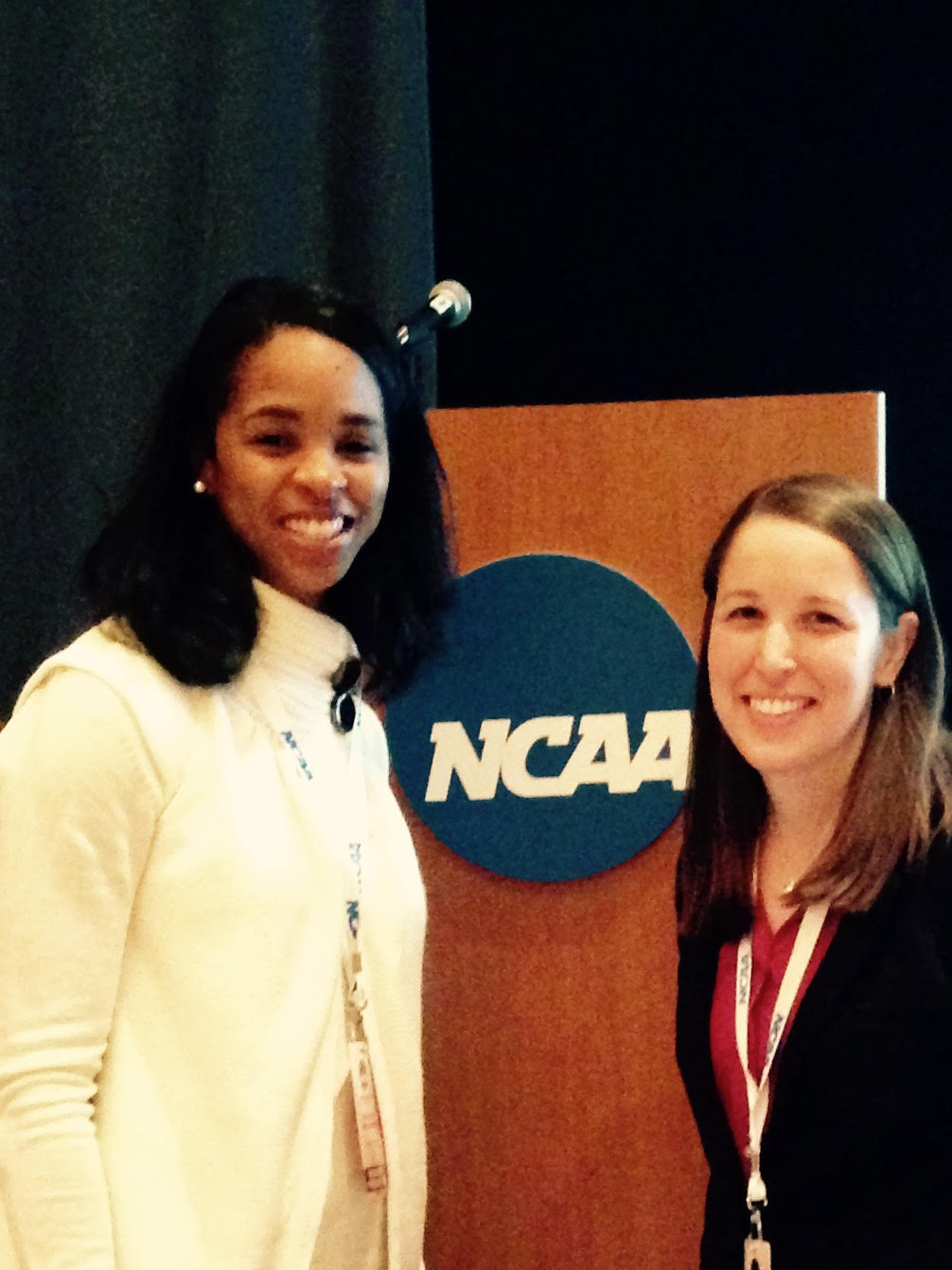
We are excited to share the news that our own UNCG Ed.D. faculty member Dr. Erin Reifsteck, along with Ed.D. Alumni Dr. DeAnne Brooks (Salem College), and Dr. Lenka H. Shriver (UNCG) are one of four research teams in the country to receive funding through the NCAA  Innovations in Research and Practice Grant Program this year. Drs. Reifsteck, Brooks, and Shriver are looking forward to continuing their work to develop programming and resources that support the long-term health and well-being of student-athletes! They would like to thank everyone at UNCG and Salem College for their continued support of the “Moving On!” program.

Posted on January 29, 2016

The Ed.D. in Kinesiology program has the pleasure of welcoming two new faculty members to our ranks. Drs. Erin Reifsteck and Michael Hemphill will join the growing program. Dr.  Hemphill will join UNCG beginning in the fall 2016 semester and Dr. Reifsteck has joined us beginning this semester.

Michael A. Hemphill, Ph.D., is currently an assistant professor of Health & Human Performance at the College of Charleston. Hemphill completed his undergraduate studies at Wingate University and graduate studies at Purdue University. His scholarship focuses on teaching personal and social responsibility in through sport, physical activity, and physical education. His research has been presented and national and international conferences included conferences of SHAPE America, American Educational Research Association, and the International Association of Physical Education in Higher Education. His work has been published in journals such as Sport, Education, and Society, and the Journal of Teaching in Physical Education, Journal of Physical Education, Recreation, and Dance, and Strategies. Recently, the College of Charleston recognized Dr. Hemphill with its Excel Award for the most outstanding faculty member in the School of Education, Health, and Human Performance. Since joining the faculty at the College of Charleston, Hemphill’s scholarship has focused on sport-based youth development through an urban squash program. He currently serves as a program advisor to several community youth development organizations and helps to oversee the implementation of sports-based youth development into the first ever extended learning day program in Charleston County School District.

Dr. Erin Reifsteck joins our Kinesiology faculty after completing a post-doctoral fellowship with the Institute to Promote Athlete Health and Wellness (IPAHW) in the Public Health Education department at UNCG. She received her Ph.D. and M.S. in Kinesiology (Sport and Exercise Psychology concentration) from UNCG along with a doctoral minor in Educational Research Methodology and a graduate certificate in Women’s and Gender Studies.  She also earned her B.S. in Psychology with a minor in Neuroscience from Saint Francis University (Pennsylvania) where she played Division I field hockey. Her research focuses on promoting lifetime physical activity and health through the translation of psychosocial theory into practice. Recently, she served as principal investigator of a National Collegiate Athletic Association-funded study that focused on the development of Moving On!, a program that supports student-athletes in making healthy transitions to life after college sports.  She is a certified health coach and currently serves on the Editorial Board for the Women in Sport and Physical Activity Journal.  In her free time, Erin enjoys teaching taekwondo and spending time outdoors with her husband, Matt, and their two basset hounds.

We look forward to the contributions both will make to the program. Welcome!!!

Posted on February 10, 2016

Jacob Surrat

Jacob Surratt, a member of the 2015 cohort of Ed.D. students, was recently featured in this story about the Health and Fitness Science Program at Gaston College in Dallas, NC. Jacob is the Associate Dean of Health and Human Services and enjoys the role he plays in helping students succeed. Read a Gastoon College news story with some more information about what Jacob is doing. He’s making a difference in the lives of students doing what he love.

Posted on January 12, 2016

Dr. Shirl Hoffman, UNCG professor emeritus of Kinesiology, was awarded the Hetherington Award by the National Academy of Kinesiology (NAK). It is the highest honor bestowed by the NAK. The award is presented annually to an individual who has impacted and strengthened the field of kinesiology.

Dr. Shirl Hoffman came to UNCG as Department head in 1986 and served this position for 10 years after which time he remained as faculty until his retirement. In 1996, Dr. Hoffman was instrumental in reestablishing the Ed.D. program as a professionally-oriented doctoral program in kinesiology. The Ed.D. program was the first doctoral degree in the Kinesiology department at UNCG but had been dormant since the shift to Ph.D. program in 1987. He advised many of the early Ed.D. students and taught what is now the KIN 750 Seminar until his retirement in 2006. Many of his textbooks and research articles are still used in the department today.

Posted on January 20, 2016

UNCG is in the top 15% of colleges and universities that support veterans success and has been named a “Military Friendly” school for the past four years in a row. The Ed.D. in Kinesiology program extends this tradition with some of our own students. A number of the current Ed.D. students have professional positions working with military or retired military, either as civilian contractors or through their professional duties. Their jobs range from mental skills training for soldiers, to faculty at West Point, to counseling veterans, police and firefighters. We caught up with some of them to hear a bit more about what they do and how the Ed.D. program is helping them do it better.

What is your current position?

Jason Suby: My current position is Assistant Professor and Certified Athletic Trainer (ATC) in the Department of Physical Education at the United States Military Academy, West Point, NY.  The staff of ATCs that I oversee consists of 4 for the physical education program and 3 for the competitive club program. In addition, there are 17 ATCs working to support NCAA Division 1 athletic teams at West Point. I started at West Point in 2000, providing athletic training services for the NCAA wrestling, soccer, and football program.  After 4 years in that position, I transferred over to the Department of Physical Education where I was given the opportunity to teach physical education coursework along with being an ATC.

Jill Wierzba: I work with Soldiers who have a variety of different specialty areas and/or needs, although primarily health care because I am at one of the largest medical installations in the world (for example: nurses, doctors, wounded soldiers, hospital/clinic support staff, communications). I teach and coach mental skills from my background in Sport Psychology to complement the training and work they are doing for the Army.

Katie Thompson: I work as a Cognitive Performance Coach within the Human Dynamics and Performance Department of the Special Warfare Education Group at the United States Army John F. Kennedy Special Warfare Center and School, Fort Bragg, North Carolina.  I teach applied sport and performance psychology techniques to Special Operations Soldiers in order to help them enhance and maximize their physical and mental performance within their operational environments.

Joel Druvenga: I work for Comprehensive Soldier and Family Fitness as a Master Resilience Trainer – Performance Expert where I teach a sport psychology and a positive psychology. We work very closely with the Warrior Transition Units (WTU) across the army. All of the soldiers within the WTU are required to come through our sport psychology curriculum during their transition process. With this relationship with the WTUs, we also have the ability to do some sport psychology work with the adaptive reconditioning (or sports) programs within the WTUs. On the national level, CSF2 supports the Warrior Games by sending a team of MRT-PEs to the Army Trials and the Warrior Games. We assign on MRT-PE to each of the different sports and they act as part of the coaching staff during the Warrior Games. I have been part of the last 3 Warrior Games and have developed some great relationships with the warrior athletes and cadre within WTC. Adaptive sports and the Warrior Games is such a fun thing to be a part of and the relationships that can be built will last lifetimes!

In addition to WTU’s we work with any unit that is interested to improve their performance at their military task. The Army already does a great job with the technical and tactical but not so much with the mental. So we may work with different units to increase Army Physical Fitness Testing scores, Weapons qualification, or my favorite Bradley fighting vehicle gunnery.

Eric Tucker: I work with several military veterans in addition to police “veterans”. I mention my work with police officers, because the clients I work with often present identical symptoms and report similar experiences of the difficulties of policing “urban warfare” opposed to conflicts overseas. Recent stories about negative policing has presented added stress for my officers; the trauma (and fear) that accompanies their work within the context of public opinion has created emotional disturbances that is difficult to conceptualize,  and almost impossible for the community to understand.

Steve Mannino: The unique demands placed on the Army Special Operations Soldier requires unique physical preparation and rehabilitation practices.  The human performance program which I lead at the US Army JFK Special Warfare Center and School is responsible for optimizing Soldiers from initial entry in special operations through seasoned operators participating in advanced skills training and provides this optimization through strength and conditioning, physical therapy, and performance nutrition. As the Human Performance Program Coordinator it is my job administer the program in a way that allows the ARSOF Soldier to be physically optimized in order defend and protect the United States and its Allies.

How has the Ed.D. in Kinesiology program helped you professionally?

Jill Wierzba: The Ed.D. program has helped me gain a deeper insight and application of teaching strategies, overall wellness & health concepts, and a generally broader perspective of how to best assist our service men and women be at their best when it matters most.

Katie Thompson: The Ed.D. in KIN Online program has allowed me to work on my degree remotely, which has been invaluable considering the demanding hours of my position.  The courses offered within the program have been very engaging and I have been able to immediately apply the concepts I am learning in my classes to my professional work.  For example, I am currently taking KIN 610 – Statistical Methods in Kinesiology, and have begun to conduct more thorough statistical tests on the performance data that we collect within our organization, which has led to clear evidence of the success of our training programs, as well as increased support for our program within the Special Operations community.

Jason Suby: During the first semester of the online Ed.D. in Kinesiology program, we learned what traits make a good leader. As a leader in my current position, I was able to inventory and utilize some of the information learned in classes to improve on my leadership style.  In addition, I have been fortunate enough to be an active member of many academic committees this year, including strategic planning, assessment, and curriculum revision committees.  The Fall term of courses in the EdD program included material relevant to being a productive member of each one of these committees. The most beneficial piece of this experience thus far has been writing, writing often, and beginning to write well. Being able to articulate yourself in front of your peers and influence others through writing is a valuable tool that continues to be sharpened by this experience.

Joel Druvenga: The way that the Ed.D. impacts my job is a lot more on the administrative side. My boss is a retired Lieutenant Colonel who’s job is to teach us civilians how the military operates. With his role he often ends up at high level meetings within the Division or Garrison Commands. This is where the highest level of decisions regarding Fort Riley and 1st Infantry Division are made. However, my boss is not an expert in our content areas so he usually has me attend these meetings with him to be a Subject Matter Expert. Even though most of our examples are related to higher education the Ed.D. has given me great insight into how to navigate the politics of headquarters. An example of where the Ed.D. has been helpful is that I am now a member of the Physical Resilience working group. This group focuses on influencing the physical training standards at Fort Riley. One initiative that I have influenced is the Reconditioning Physical Training for injured soldiers. The training had been rather poor previously, but we have developed a curriculum to standardize the training across the division which includes adapted training for different injury levels as well as psych of injury concepts.

Steve Mannino: There are definitely some aspects of the program that I have been able to incorporate into my job.  Learning about policy and procedures has come in very handy as I have written several policies lately.  Also, as a person who was not formally trained as a teacher, I find that classes that cover educational strategies have helped my educational methods evolve.

Is there anything else you would like to tell us?

Jason Suby: Service to the military academy cadets is an honorable mission that I feel extremely blessed and fortunate to be a part of.  The traditional setting for an athletic trainer at the collegiate setting does not typically incorporate student development, service to the department, faculty development, scholarship, and teaching responsibilities.  I am grateful that I’ve been afforded this opportunity and I know that both of my grandfathers who served in the military during World War II are extremely proud of the service I have provided at West Point to the Corps of Cadets and the Nation.  I am proud to serve the Nation through my civilian position at West Point.

Posted on January 20, 2016

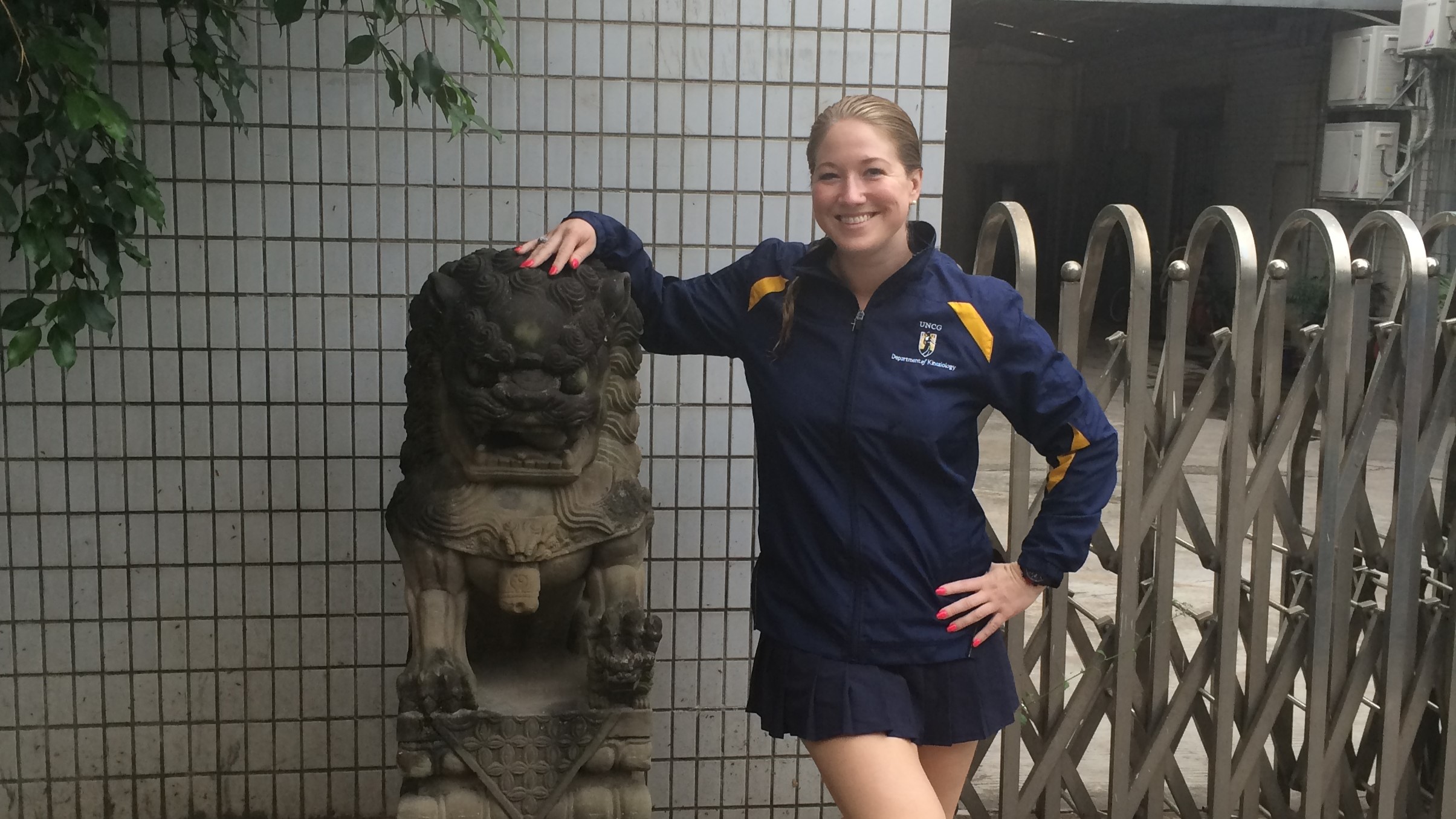
Jennifer Lichty posing by a statue of a Chinese guardian lion

The Ed.D. in Kinesiology program provides a unique opportunity for students to pursue professional opportunities while attending classes. Our student, Jennifer Lichty from the 2015 cohort, is taking full advantage of this. Jennifer is from Oro Valley, AZ but recently took a position in Shenzhen, China teaching Physical Education. We recently caught up with Jennifer to see how things are going and how the Ed.D. in KIN program fits into her busy life.

Can you tell us a bit more about where you are, what you are doing, and how you make it all work?

“I got here on 20 August, 2015. I live in Shenzhen, China, on the other side of the bay from Hong Kong. The school I work for, BASIS International School Shenzhen, just opened September 1. It’s BASIS’s first international school, so I am its first physical education teacher. This is also my first time as a PE teacher after being a personal trainer with my own business, Jennifer Lichty Fitness, LLC, in Oro Valley and formerly a head swimming coach.

I work with almost exclusively with Native Chinese speakers in primary grades 1–6. I teach in English, providing students with both physical education and English immersion. I am exactly 12 hours ahead of UNCG, which makes studying in the Ed.D. program very interesting. There are challenges to being in China while my cohorts and professors are in the states. However, the program is well designed and allows me to earn my doctorate on a timetable that fits me and my opposite schedule from the U.S. East Coast.
Group work is the most obvious challenge since when I am rising, others are going to bed, when I am working, others are sleeping, and vis versa. However, I think it will work out fine with some adaptations.

So far I’ve learned that some technologies fit better for me to communicate with than others. Email is best while instant messaging services like Hangouts may not always be reliable here or may not be ideal as my schedule varies from others and immediate communication is not always feasible or possible.

However, I love Google drive and docs! They’ve saved so much time in emailing documents back and forth. I completed my masters while living in Japan. Seven years ago when I did that, we would have to email group work to each other, and the time zone difference made it difficult to pass documents quickly around the group.

Being able to live anywhere and do anything while getting my EdD is amazing! I feel blessed to have the ability to choose my path and residence while still continuing my education online.”

Was it hard to make the decision to take the job? What thoughts went through your head before deciding this was the right move for you?

“My first thoughts were, is this possible—to do my doctorate in China with the regulation of internet access in that country? I had to do a lot of research . . . and learned that it should be feasible with some work on my end before leaving the states. I had experience before going to school online when I completed my masters online while living in Japan. That was almost the same situation time zone-wise—I think a 13 hour difference—and it was hard in group project situations.

However, I wanted to try something new. I had chosen the UNCG online doctorate for this purpose, to be able to seize the day, in whatever country . . . while also continuing to further my education. I won’t lie. It is hard getting a doctorate in China with potential internet-access issues and a 12-hour time difference. But I’ve faith that it will all work out, and I am now starting to get in a better groove and routine for it.”

What advice do you have for others who might want to consider earning their degree while living abroad?

 “As far as advice—research before you go, if your country will allow you access to the websites and services you need to complete your doctorate and how you would be able to access the web information you would need. Second, be prepared to know that it is hard working in groups when you are on a different time zone. Learn to be ok with that knowledge! Understand that some technologies are better than others for your situation. I’ve learned for me that Google drive and docs are wonderful—and I love them— and that email is the best communication method for me. Other than that, anything is possible!”

Great job at doing it all Jennifer. We look forward to hearing about your continued success!

Posted on August 20, 2015

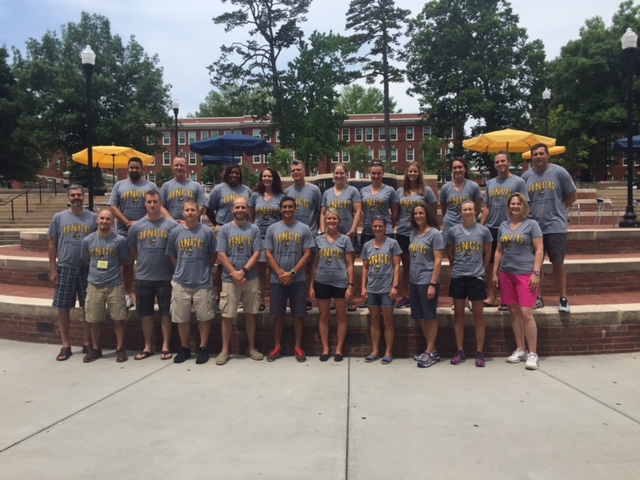
Ed.D. in KIN Cohort 2015

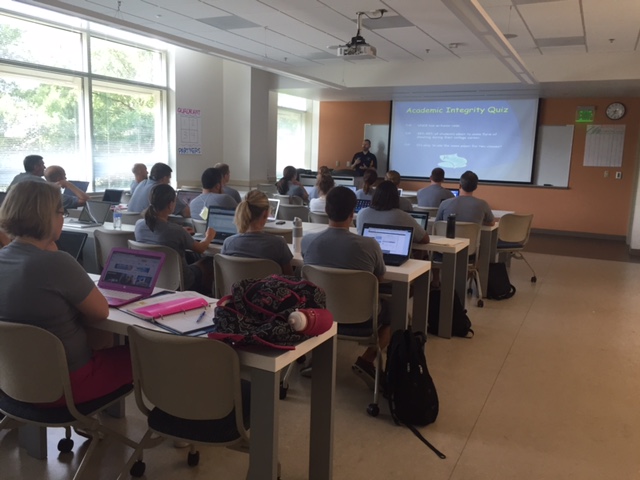
UNCG’s Ed.D. in KIN Online program is beginning its second academic year online.  Program Director, Pam Brown, is excited about the upcoming year.  “Our second cohort of 22 students joined us in June for orientation.  It was amazing how quickly they bonded; by the second day you would have thought they had known each other for years.”  At the orientation seven of the students from the 2014 cohort returned to campus, as well, to offer advice to the incoming students about successfully completing an online doctoral degree program.  Conversations revolved around the use of technology, the challenges of balancing their education along with their careers and families, best practices and helpful hints, along with how to successfully navigate an online program. The new cohort was very excited about their experiences during orientation at UNCG and are excited to begin classes this fall. Here are some of the things they had to say about their experiences at orientation:

“I enjoyed the orientation and gained a lot of useful information.  Prior to orientation I was not sure what to expect from this program.  However, the orientation served its purpose by providing sessions on all of the pertinent areas and incorporating many of the departments on campus that we may encounter.”  

“This was a very valuable orientation.  I feel connected to my cohort, I loved getting to know some faculty and I feel excited to begin courses this fall.”   

“I feel much better about the Ed.D. in Kin Online program because of attending this event.  I’m really excited to get started.  Thank you so much for all your help!!”

“I had a wonderful and enriching experience. The sessions were balanced. I didn’t feel absolutely overwhelmed with information. You were all organized and on top of things. Thanks for being open to any questions and super-friendly.”

“Just a wonderful experience. I feel like I made 20+ new friends. I know I can work with everyone in the group.”

We would like to extend our best wishes to the incoming cohort of students for a successful four years in the Ed.D. in Kinesiology program. We would also like to congratulate the 2014 cohort on their successful completion of year one, and wish them continued success in the upcoming year.

We look forward to our continued growth, and would be happy to talk with anyone interested in the program.  Contact us at eddkin@uncg.edu.

Posted on April 26, 2015

Recently, two students in our Ed.D. program, Nicole Yard and Eric Tucker, attended the Behavioral Health Summit at Greensboro College, in Greensboro, NC. They both found the Summit to be extremely beneficial to their professional practice and educational endeavors.

“The Summit was a platform for the Behavioral Health and Faith-based communities to converge on a number of topics related to the role religion and spirituality has on mental health. Inversely, it highlighted the importance of “person-centered” care that is central to mental health issues.  Many individuals with mental health conditions view spiritual connections as fundamental aspects of their overall treatment. When life stressors trigger mental health issues, treatment interventions that considers a faith-based perspective may directly influence compliance, “dis-ease” management, and psychosocial functioning. Relationships was central to the entire Summit. The connection to self and others becomes a reflection of relationships held to a Higher Power that must be integrated into healthcare.

Many healthcare professionals feel unequipped to address religious concepts, as much as religious leaders feel unqualified to attend to the mental health of parishioners. This Summit allowed both “worlds” to discuss the role of religion when faced with mental health questions. It also informed mental health specialists on how to utilize Places of Worship as a natural, community resource for clients lacking social supports, family connections, and/or feeling isolated. Places of Worship are especially critical to patients having mental health conditions who value spirituality.

It was important for me to attend this Summit as a student of Kinesiology, and as a Behavioral Health specialist. I found it fascinating that the clergy and behavioral health community equally valued physical activity for improving health and wellness. While religious beliefs or views on therapy may vary, the importance of being physically active was consistently aligned. The Summit further strengthened my position that exercise is a viable adjunctive therapy for some mental health conditions. It provided additional insight how I may integrate this culturally relevant concept into clinical practice and as a consideration to issues related to coursework.”

– Eric Tucker

“Mental health is an issue that affects all people in all aspects of life. It is very easy for people to write off behavioral and emotional issues as negative personal traits and fail to see the suffering and pain that is causing those issues. As an Athletic Trainer, I am in a position where I work with a wide variety of healthy, active people. It is partially my job to recognize when seemingly healthy athletes are having a problem and connect them with the appropriate resources to help them. As I said, it is only partially my job. Teachers, coaches, parents, religious leaders, friends and other family members also need to know how to recognize when someone they care for or work with has an issue with which they need help. The Behavioral Health and Faith Summit was an amazing opportunity to learn more about mental health and available resources, including faith-based healing. This was not a conference that was limited to mental health care workers, there were also students, teachers, advisors, religious leaders, caregivers, as well as friends and family of persons suffering from mental health issues. It was a great forum for people to ask questions and receive the appropriate support.

This summit addressed issues that are fundamental to daily life and functioning. As was said repeatedly at the conference, everyone, everywhere, has come in to contact with someone suffering from mental health issues. What a different experience it could have been for everyone involved had someone recognized the issue for what it was and helped that person connect with supportive resources. I valued the summit for the positive cultural encounters it created as well as the invaluable information it presented. I plan to invite the students in the Athletic Training Program I work with to come with me to the summit next year. It will allow them an experience I can’t create in my classroom.”

– Nicole Yard

Posted on November 05, 2014

Recently, members of the Ed.D. cohort attended a webinar to learn to use the citation management tool, Zotero. This session is part of our ongoing professional development and academic support being offered to our online student cohort. The goal of the session was to help streamline the resource collaboration and literature reviews that are part of the program. Zotero will also become an invaluable tool for the students when it is dissertation time. The webinar was led by HHS librarian Lea Leininger and on a Wednesday evening, the students all gathered virtually for a lesson on Zotero basics. There were lots of questions for Lea and she was extremely helpful in addressing any problems and concerns that were encountered. By the end of the webinar everyone was more knowledgeable and really excited to start using Zotero to make their lives easier during the research and writing process.  With the success of this webinar, we can’t wait to add additional virtual learning meetings!

“The real-time assistance and immediate interactions were very beneficial to our understanding of Zotero…”

-Dave

“This was a fun session.  The participants were fabulous!  They contributed great questions and comments.”

-Lea

Zotero is an online citation management program that allows collection, management, and online syncing of the user’s library on more than one computer, all while being integrated into your browser for ease of use during research. It also allows for group sharing and collaboration. This seems to be ideal for an online learning community like the Ed.D. cohort so the students were very excited at the opportunity for an education session.