


In-Person Open House
Date: November 14, 2025
Location: Coleman Research Gym (Coleman 248) and Kinesiology Labs
Posted on September 23, 2025
In-Person Open House
Date: November 14, 2025
Location: Coleman Research Gym (Coleman 248) and Kinesiology Labs
Posted on September 23, 2025
Virtual Open House
Date: 11/21/2025
Location: Teams (link will be sent to all who RSVP
Posted on September 19, 2025
Two EdD in KIN graduates are shaping the future of health and wellness education right here in Winston-Salem, NC! Callie Phillips and Tyler Johnston bring their expertise, vision, and commitment to their new roles, demonstrating the lasting influence of their UNCG EdD in KIN training.
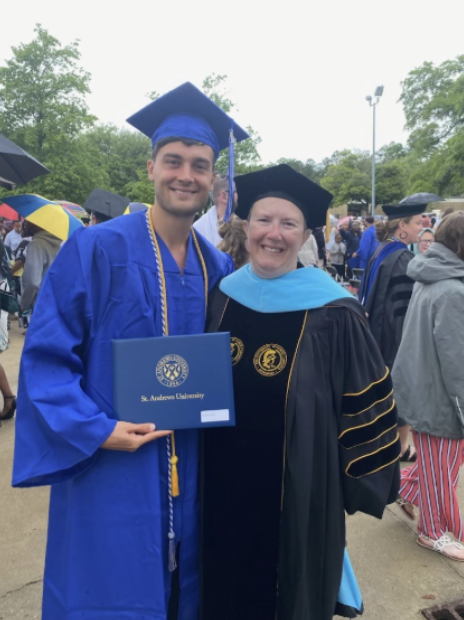
Callie Phillips, an EdD in KIN alum (2019), recently accepted a new role as the Instructional Coordinator for Physical Education and Wellness at Forsyth Technical Community College in Winston-Salem, NC. In this role, Callie is leading efforts to rebuild the Physical Education and Wellness program, expanding course offerings, and fostering wellness initiatives across campus. Her short-term plans include launching strength and conditioning courses for both student-athletes and the general student body, along with continuing education opportunities for the greater community. Long-term, Callie hopes to develop transfer programs that will prepare students for KIN related degrees and will also serve as chair for a wellness committee on campus.
Callie notes that her EdD in KIN training directly shaped her career path, providing her with the skills to gather data, build a variety of programs, and design classroom curriculum that meets her students and institution’s needs. We are excited to see Callie bring her passion and vision for Physical Education and Wellness to life at Forsyth Tech and congratulate her on her new chapter!
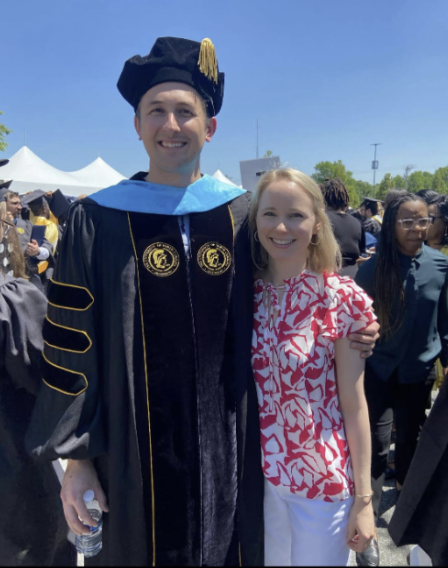
EdD in KIN graduate, Tyler Johnston (2024), has taken on a new role as an Assistant Professor of Physical Therapy at Winston-Salem State University (WSSU). In this position, Tyler teaches clinically focused courses, including the Community Care Clinic, where he supervises student physical therapists as they provide care to patients within the local community. Having served as an adjunct professor at WSSU for the past two years, he was invited to transition into this full-time faculty role following the completion of his EdD.
Tyler credits the EdD in KIN program with preparing him to balance both his professional and personal life while completing meaningful research that directly benefits clinicians in the field of physical therapy. His dissertation focused on real-world challenges faced in clinical practice, reinforcing his passion for bridging research and application. He also draws from his own experience as an online learner to foster stronger connections with his students, helping to make them feel supported in their academic and professional journeys. We are proud to see Tyler step into this new chapter at Winston-Salem State University, where he will continue shaping the next generation of physical therapists while advancing impactful teaching and research!
If you are interested in learning more about the EdD in KIN program, check out our EdD in KIN website for more information.
Posted on June 30, 2025
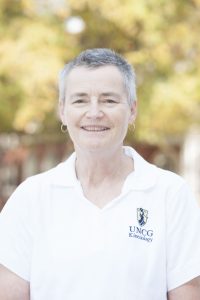
After 38 years at UNCG, Dr. Diane Gill will retire at the end of the summer. As an educator for 50 years, she has taught and mentored countless students and colleagues in the field of kinesiology. Her passion for helping others has led to tremendous success. She’s considered a legend in the field of sport and exercise psychology, particularly social psychology and physical activity, and her textbook has been a staple in college classrooms since it was first released. She has been active in many roles at UNCG and professionally that include faculty, chairperson, associate dean, director, editor to name a few.
On Wednesday, April 30, Diane delivered her last lecture at UNCG. The lecture discussed her career, the history of the UNCG Department of Kinesiology, the field of sport and exercise psychology, and the impact of the EdD in Kinesiology program. Along with a room full of faculty, staff, students, and alumni, many people attended the session virtually. If you are interested, you can watch her last lecture using this alumni engagement link .
The festivities for Diane continued on Wednesday, May 7, as over 100 people joined us at UNCG’s Alumni House to celebrate Diane and her wonderful accomplishments at UNCG and beyond. Friends, colleagues, current and former students shared their fondest memories of Diane and offered well wishes in her next chapter. A select group of speakers shared special words with the audience, including her former classmate and colleague Dr. Dan Gould; the dean who hired her, Dr. Dick Swanson; along with former graduate students and professional colleagues, Dr. Al Smith, Dr. Lavon Williams, and Dr. Erin Reifsteck, as well as our kinesiology department chair, Dr. Jenny Etnier. Diane shared her gratitude and there were smiles (and some tears) all around the room.
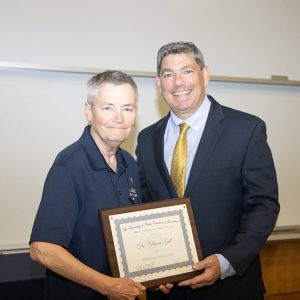

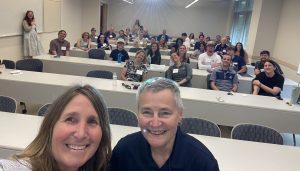
To honor Diane, donations were made by many to the EdD in KIN Enrichment Fund to help cover some costs for the incoming EdD in KIN students attending orientation. Donation requests will be made again next academic year as we plan to continue this fundraising effort, so you will have another chance to donate.
In May, Diane was celebrated by the School of HHS as one of its five retiring faculty, which also included three KIN faculty members Dr. Allan Goldfarb and Dr. Sandy Shultz (this HHS press release talks more about all of the retirees). She was also recognized with an honorary degree Doctor of Humane Letters from her alma mater, SUNY Cortland at their May Commencement ceremony. The selection committee noted that “Diane is a role model for students and colleagues alike…She truly has helped create a healthier, more active world in her life’s work.” This link will take you to the SUNY Cortland press release.
Diane is a rockstar, mentor, friend, and more to so many people. Her legacy will live on at UNCG and beyond. We wish her a wonderful retirement and look forward to staying connected and hearing stories of her many adventures in retirement. Diane, thank you for all you have done at UNCG and for the field of sport and exercise psychology.
Posted on May 29, 2025
We love connecting with our students and alumni to hear about career changes and other accomplishments. This story will share more about a current student and alumna, check it out to learn more.
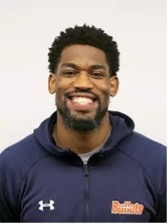
Reggie Overton
Reggie Overton, a current EdD student, began a new job at Gettysburg College as the first full-time strength & conditioning coach for the athletic department. He oversees four part-time coaches in addition to training for all the varsity athletic teams. During the most recent semester, Reggie stepped into role of Student Athletic Advisory Committee advisor as students-athletes are working to start the organization on campus. Reggie has also been accepted into the NSCA’s L.I.F.T. Mentorship program as a member of the 2025-2026 cohort. Congratulations to Reggie for his new position and we look forward to hearing more about his professional growth related to the mentorship program.
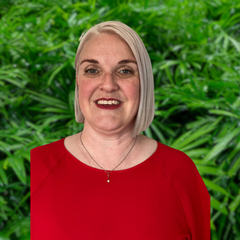
Lava Garner
LaVerene “Lava” Garner, an EdD in KIN alum, currently teaches in the Doctor of Physical Therapy (DPT) program at Hawai’i Pacific University – Las Vegas in a hybrid DPT program that started in 2022. With fully online coursework, Lava notes that her time in the EdD in KIN program at UNCG helped her to experience online education as both a teacher and a student as she was teaching online at her previous university while enrolled in the EdD in KIN program at UNCG. Lava feels this experience prepared her to teach in the hybrid DPT program while also moving to farmland that has been in her family for many generations. Her online expertise has allowed her to grow professionally as an educator while giving her the flexibility to grow as a regenerative farmer. We are excited to hear more about Lava’s success as she pursues both passions – her nurturing spirit will have a long lasting impact on the people and land she cares for.
If you are interested in learning more about the EdD in KIN program, check out our EdD in KIN website for more information.
Posted on September 11, 2025

People are living longer, and we want to make sure that those additional years of life are quality years. This also has ripple effects for society by reducing health care spending and lessening the burden on caregivers.
Kinesiology professor Dr. Jaclyn Maher, UNCG 2024 Early Career Research Excellence winner
Posted on August 21, 2025

Physical education and physical activity are good for our rising generation. It’s good for mental health. It’s good for brain health and academic achievement. What can we do to fit it into their daily lives?
Dr. Eric Drollette, Kinesiology professor and researcher
Posted on August 13, 2025

The study shows a practical connection between brief, high-intensity exercise and children’s academic performance. The research reveals that nine minutes of strategically designed, high-intensity interval training can significantly enhance cognitive function and verbal comprehension in children aged 9 to 12.
A study conducted by UNCG Kinesiology Professors Dr. Jenny Etnier and Dr. Eric Drollette
Posted on July 29, 2025

The 2025 Alzheimer’s Association International Conference (AAIC) took place July 27th – 31st in Toronto, Canada. Each year, this conference brings together distinguished researchers, clinicians, and dementia professionals from around the world to share the latest research and innovations in the field of Alzheimer’s disease and dementia.
Here are a few highlights from the 2025 conference:
If you’re interested in learning more about the exciting discoveries shared at the 2025 AAIC, visit https://aaic.alz.org.
Posted on May 21, 2025

In May 2025, the graduating class of the Doctor of Education in Kinesiology program presented their doctoral research to their peers, Kinesiology faculty members, and others during the Dissertation Showcase. The students designed the visual abstracts to share their findings and the implications of the work with the community to help others use the findings in their own settings.
Click the images to see larger versions of the infographics and use the links provided to read more about these exciting research projects!

Faculty Perceptions, Attitudes, and Knowledge of Interprofessional Education: Exploring Integration into an Allied Health Learning Community
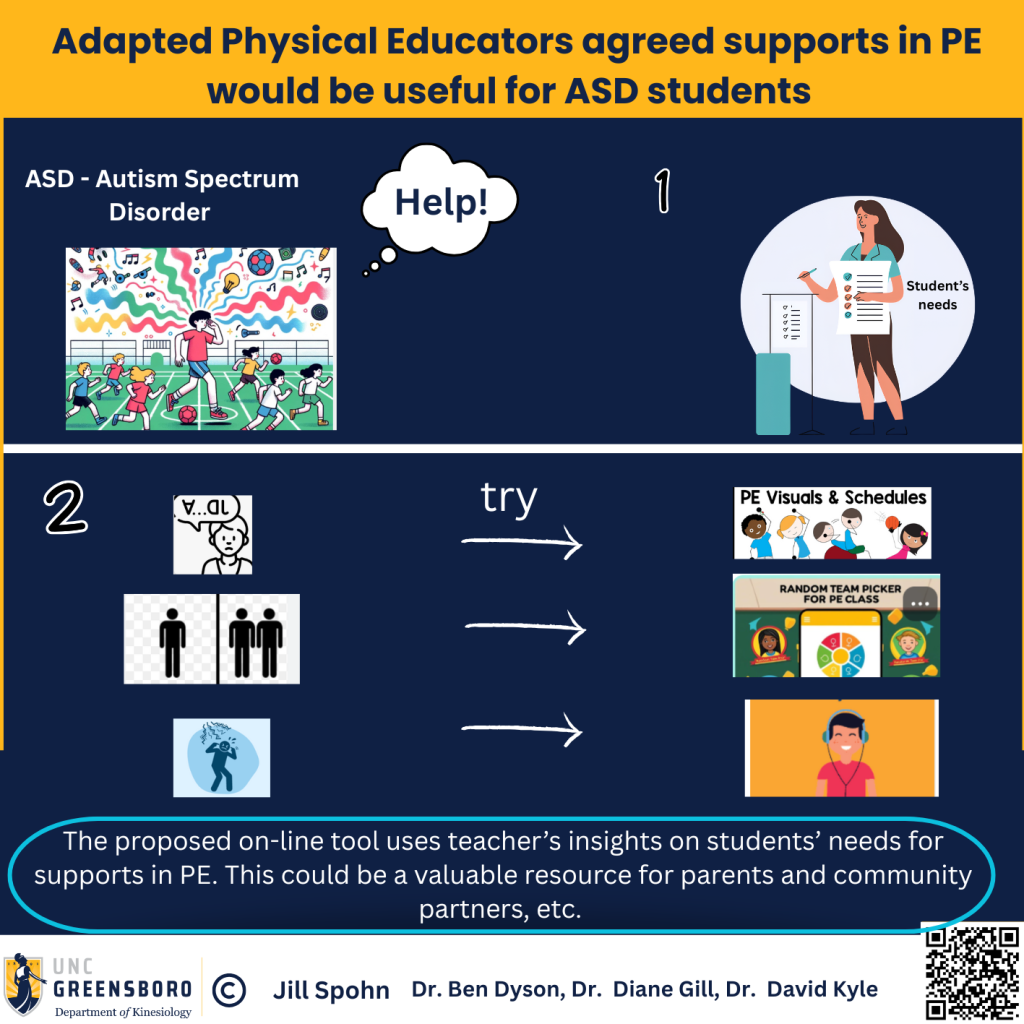
Creating an Affective Domain Assessment Tool in Physical Education for Students with Autism Spectrum Disorder
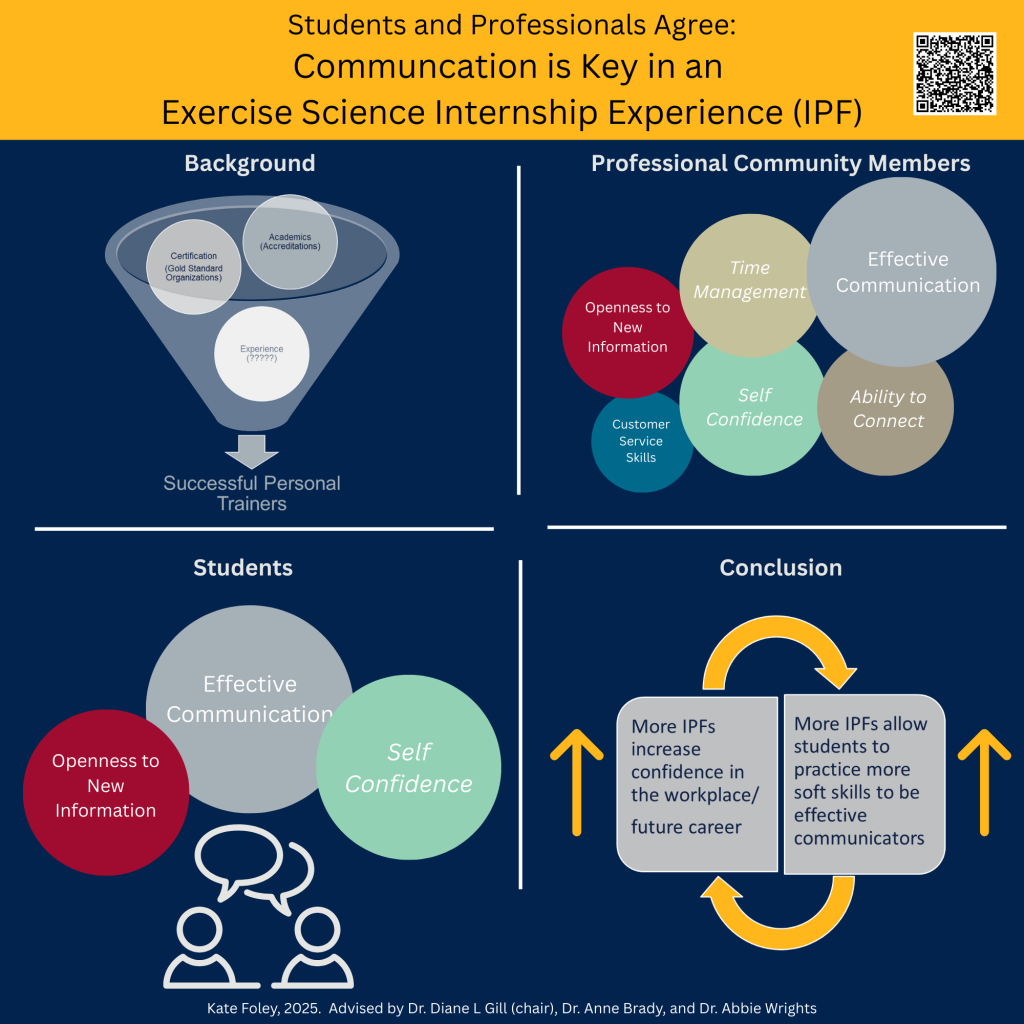
Field Work in Exercise Science: Perspectives from Students and Community Professionals
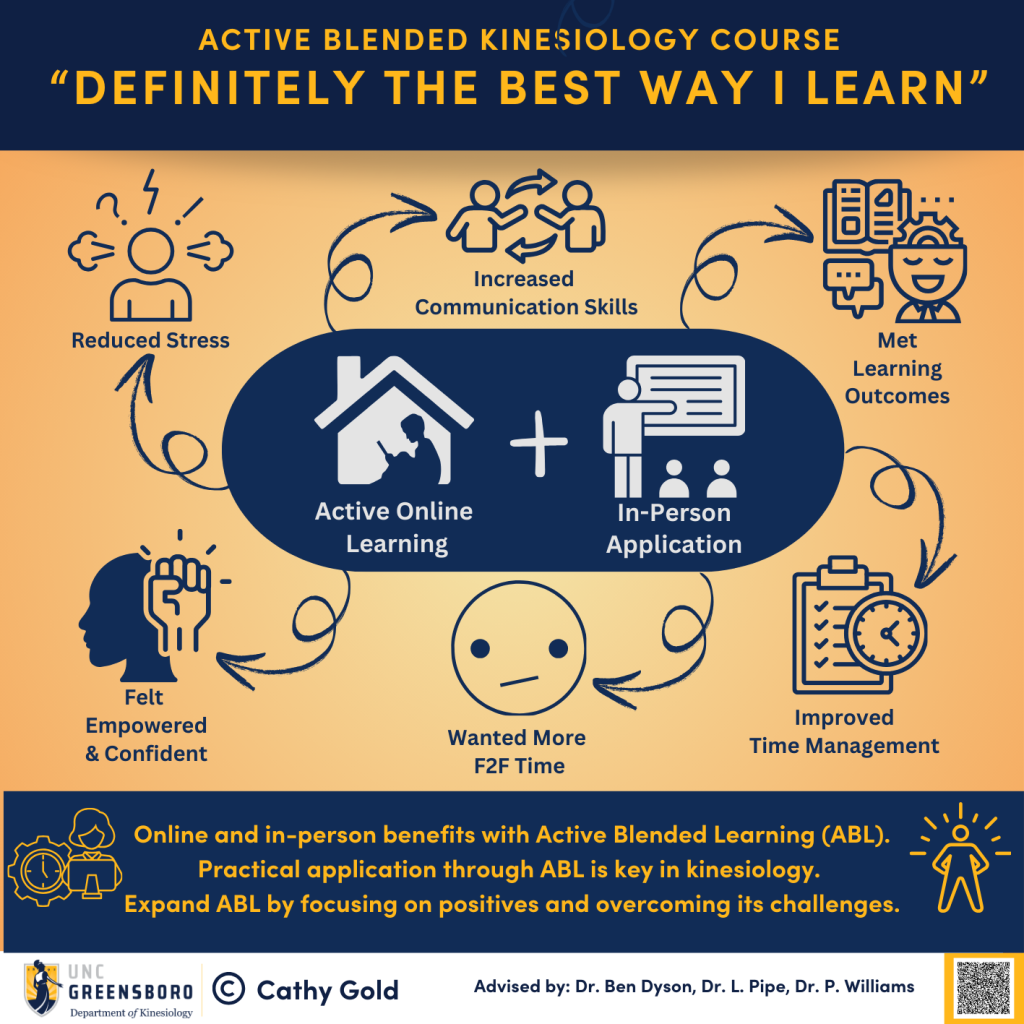
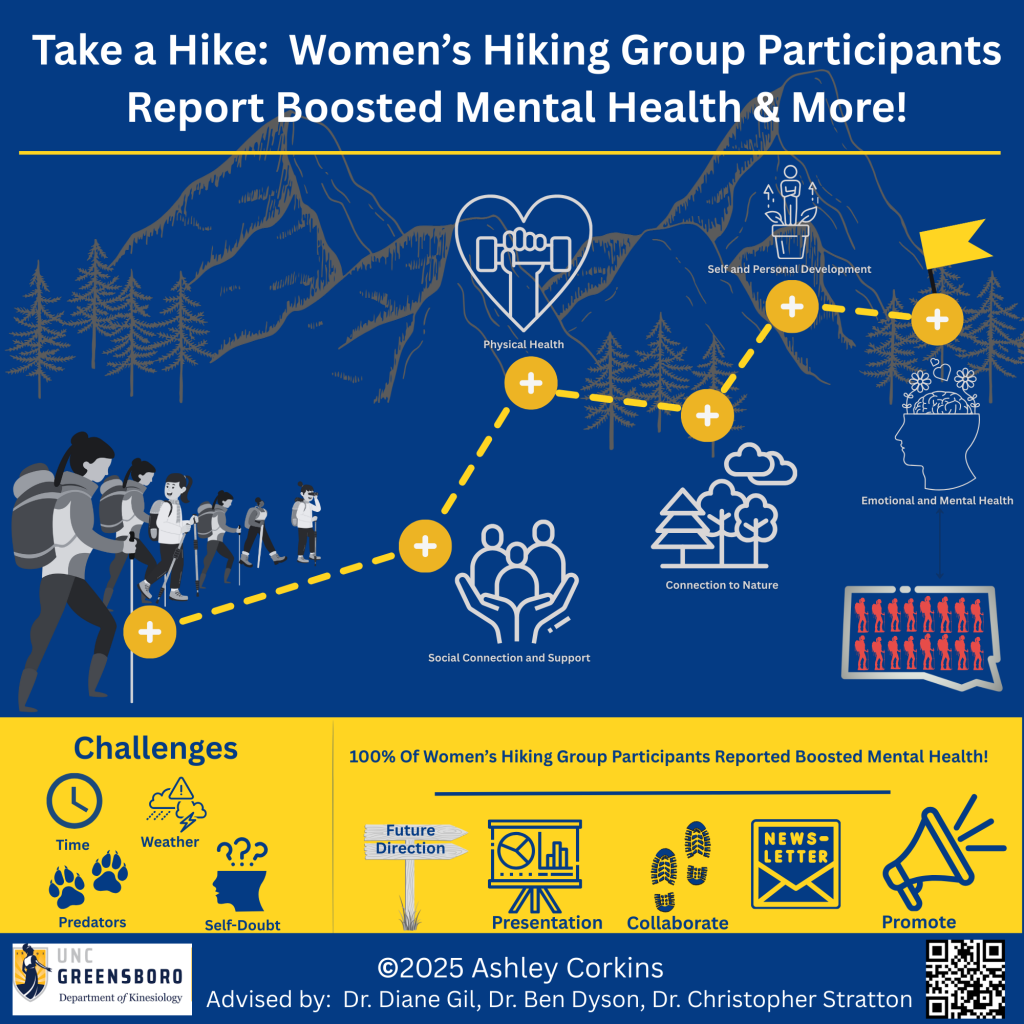

Perspectives of Exercise Adherence Among Current Exercise Adherers with History of Physical Inactivity
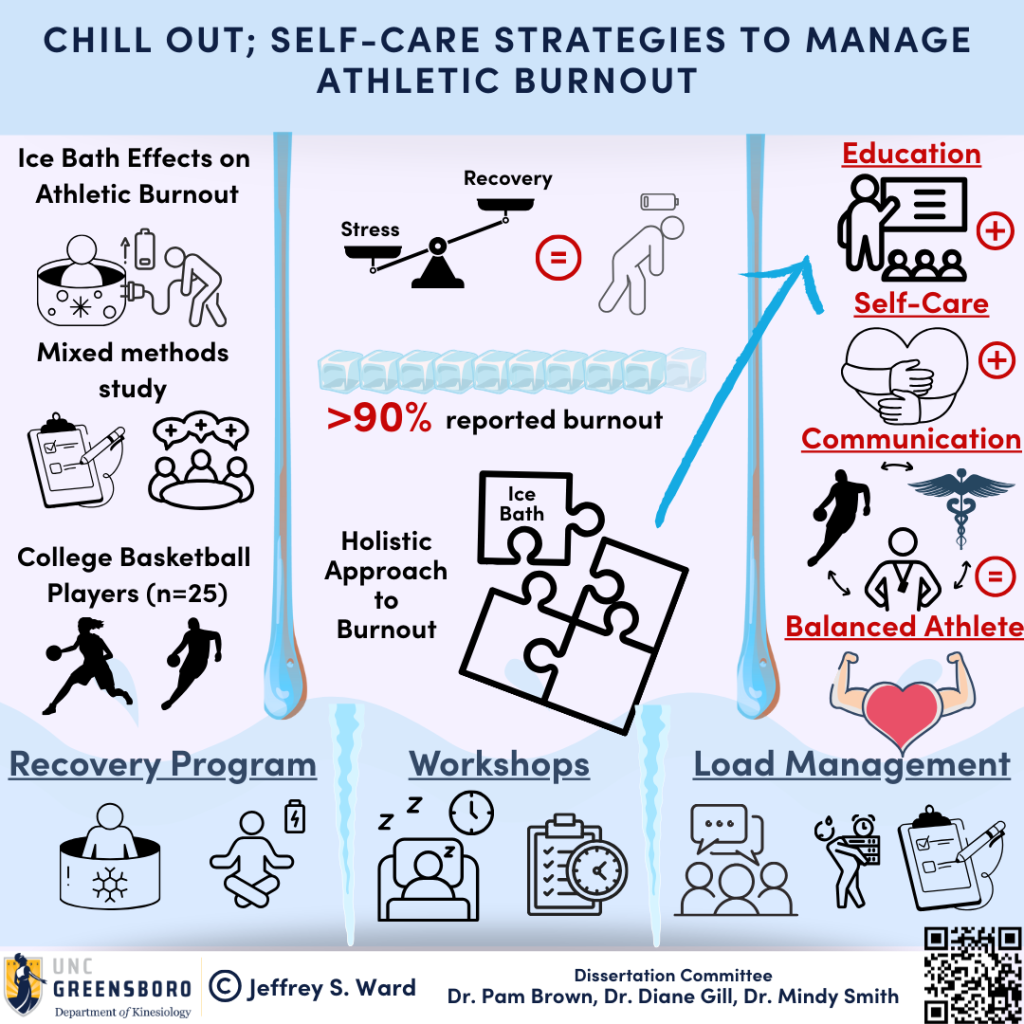
Proactive Use of Cold-Water Immersion to Mitigate the Onset of Athletic Burnout
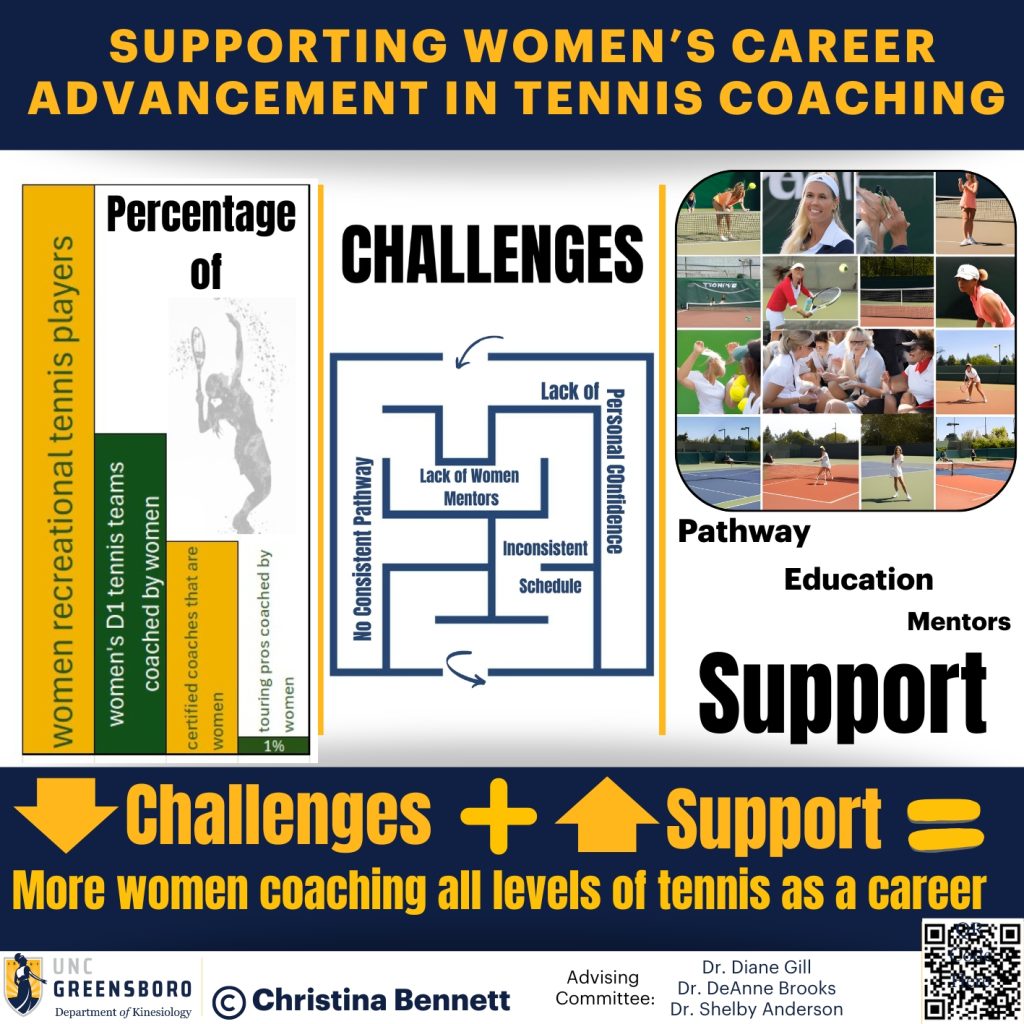
Challenges and Supports to Women’s Career Advancement in Coaching Tennis
Read the full abstract

Good Grief: An Autoethnography of an Instructor’s Quest for Trauma-Informed Enhancements to the Group Fitness Experience.
