Posted on February 25, 2024

Goldie Byrd Featured Image

Today we want to highlight a researcher whose work has made great strides to expand Alzheimer’s disease research, Dr. Goldie Byrd. Dr. Byrd, now the director of the Maya Angelou Center for Health Equity, has been contributing to Alzheimer’s research for over 15 years.

Her research focuses on looking at genes related to Alzheimer’s disease, particularly in African American Individuals who are twice as likely to be diagnosed with Alzheimer’s yet massively unrepresented in Alzheimer’s research. But Dr. Byrd’s achievements go way beyond the lab, throughout her career she diligently sought to reduce health disparities by providing health education for the local community, providing resources for dementia caregivers as well as promoting research amongst underrepresented communities.

Dr. Byrd’s resume is too much to fit into 200 characters and we don’t want to water down anything more than necessary. So check out this article that goes into more details of her research efforts and more!

Posted on March 28, 2022

Impairment Featured Image

As people age, many notice a gradual increase in forgetfulness. For example, it may take a few seconds longer to recall a new friend’s name. Occasional forgetfulness is expected when aging, but if it becomes more consistent, mild cognitive impairment or other dementias may be present.

What is mild cognitive impairment (MCI)?

MCI is a general term defined by the Mayo Clinic as a subtle but measurable memory disorder. A person with MCI may notice their memory or mental function has changed; their family may also notice. However, these changes do not yet interfere with daily life.

What are the symptoms/signs?

  • Forgetting things more often.
  • Losing your train of thought.
  • Decision making and planning feels overwhelming.
  • Losing things more often.
  • Change in visual perception.
  • Trouble finding your way around familiar environments.

What is the cause?

There is not one single cause of MCI. However, the risk of developing MCI increases with age. Research suggests genetic factors may play a role. Also, persons diagnosed with diabetes, depression, cardiovascular disease, or stroke may have an increased risk.

Will it lead to Alzheimer’s?

Symptoms of MCI may get better, stay the same, or progress to Alzheimer’s disease or dementia. Since MCI may be an early sign of a more serious memory disorder, it is important to see a doctor or specialist if you suspect that your memory challenges are becoming more noticeable.

How to manage MCI?

  • Make an appointment with a doctor.
  • Participate in a clinical trial or study.
  • Exercise regularly and eat nutrient-rich foods.
  • Practice good hygiene and sleep habits.
  • Stimulate your mind with games and puzzles.
  • Engage socially with others.

Posted on March 30, 2022

Research Featured Image

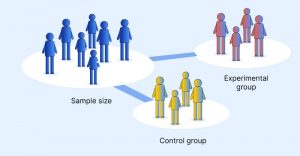
Research studies often use experimental and control groups to look at change relative to an intervention. At the start of a study, researchers identify the population they’re interested in studying (e.g., participants in a certain age range or who have similar lifestyles or health risks). These participants are then randomly assigned to either an experimental group (which gets the intervention) or a control group (which gets a placebo or might be asked to maintain their normal lifestyle). The control group provides a critical comparison group. The experimental group follows a protocol that changes their lifestyle or habits. At the end of the study, researchers can measure any differences between the control and experimental groups to see if the new protocol (dietary change, medication, etc.) caused a change in the outcomes of interest.

Many studies, such as the PAAD-2 study at UNCG, enroll participants who fit certain criteria and then randomly assign them to either a control group or an experimental group. For example, all participants enrolled in the PAAD-2 study are between the ages of 40-65, exercise less than 90 minutes per week, and have a family history of Alzheimer’s disease or dementia. The control group is asked to maintain their current lifestyle of exercising less than 90 minutes per week. The experimental group begins the study’s intervention which includes a walking program and attending virtual strength-training classes. Throughout the study, all participants (control and experimental) undergo cognitive and fitness testing. Any changes in the experimental participants can be compared with those in the control group. Through group comparison s, the PAAD-2 researchers can determine whether the changes were caused by the exercise protocol (if the exercise group outperforms the control group at the post-test) or something else like regular aging (if both groups decline by equal amounts from pre-test to post-test).

When enrolling in a research study, participants sometimes ask if they can be assigned to the experimental group because they believe it will be more beneficial to the research, but the control group is just as beneficial! Regardless of whether a participant is assigned to the experimental group or the control group, they are an invaluable part of that study. The control group is just as important as the experimental group; without it there would be no experiment. Without a control group it is impossible to confidently determine which changes or outcomes are due to the intervention as opposed to being due to some other variable.

Researchers are grateful for all study participants and need people to continue enrolling in studies regardless of which group they may be randomly assigned to. Because of the participants in the PAAD-2 study, the fight against Alzheimer’s presses on daily. Thank you to the PAAD-2 participants and all individuals willing to participate in a research study.

Posted on April 25, 2022

Seth Rogan Featured Image

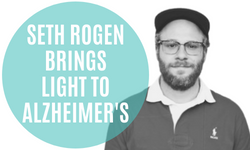
One of the organizations that has stepped up to the fight against Alzheimer’s disease is Hilarity for Charity. Hilarity for Charity (HFC) was founded by actors Seth Rogan and Lauren Miller Rogen. HFC supports family caregivers by providing valuable resources, promoting brain health research, and inspiring the next generation to do the same. Family caregivers are the unsung heroes in the fight against Alzheimer’s disease.

Since 2012, HFC has sought to support family caregivers by providing resources that are available across the country. These include online support groups, self-care materials, and grants for respite care. HFC partners with Home Instead to provide extended, in-home respite care that ranges from 3-6 months, for free! All these resources can be found on the HFC website with links to platforms such as the Map Habit which uses visualization tools and mindfulness techniques to create structured habits that can be comforting for some care recipients.

In addition to providing resources for family caregivers, HFC has recently launched HFCUniverse, a growing online course catalog promoting healthy lifestyle habits for high school and college students because “It’s never too early to start taking care of your brain”.

HFC plans to expand their impact on those affected by Alzheimer’s by creating more resources to alleviate caregiver burden and to inspire the upcoming generation of advocates against Alzheimer’s. We at PAAD-2 are proud to be in the fight with them!

Hilarity for Charity (HFC) is dedicated to promoting brain health research. Check out our article discussing the 5 brain health tips from the HFC team, based on that research:

Brain Habits Featured Image

Posted on April 27, 2022

Brain Habits Featured Image

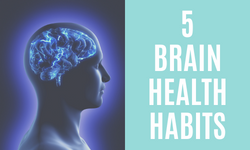
Hilarity for Charity (HFC) is dedicated to promoting brain health research that has been proven to reduce the risk of Alzheimer’s disease and related dementias. Research has shown one of the best ways to reduce these risks are through lifestyle changes. Below are 5 brain health tips from the HFC team, based on that research.

1. Eating Right
There are certain foods that promote brain health more than others. For example, berries, nuts, green leafy vegetables, and even dark chocolate contain vitamins and minerals that improve brain health. Some simple ways to incorporate these foods into your diet could be to sprinkle some fresh berries on top of your oatmeal or yogurt or blend some fruit into a smoothie. Although any excuse to eat a piece of chocolate is a good one, to promote brain health, dark chocolate with a lower sugar content has the best nutrient properties.

2. Getting Deep Quality Sleep
Something as simple as sleep is beneficial to your brain. While we sleep, our brains are clearing out waste products that have built up throughout the day. 7-9 hours of sleep is the ideal range to get a good quality rest. To optimize your sleep, try to avoid harsh lights like phone, computer, and TV screens before bed. Avoiding these screens for at least an hour before bed may improve your quality of sleep.

3. Exercising
PAAD-2 is currently investigating the link between exercise and brain health so of course this is our favorite tip! The word exercise can be intimidating to a lot of people because there are so many places to start. But we are NOT saying you must get up tomorrow and run a marathon. The goal of exercise can be reduced to 2 points: raising your heart rate and moving your body. This could be anything from pushing the lawn mower to walking a dog.

4. Emotional Well-Being
HFC suggests daily meditation practice as a good way to support emotional well-being. Try taking 15 minutes a day to reflect, pray, or practice breathing techniques. There are plenty of apps available for guided meditation. Another way to promote emotional well-being is to change your environment to initiate a change in mindset, take a walk outside if you’ve been stuck at a desk all day, or work on decluttering/rearranging your living space.

5. Mental Fitness
Mental fitness is just what is sounds like, exercising your brain. You can do this by learning new skills such as pottery or picking up a daily journaling habit. Having a broad range of activities that stimulate different parts of the brain is ideal for optimal mental fitness. Try puzzles, adult coloring books, taking a class to learn something new, reading, cooking, using your non-dominant hand, playing cards, or going to a museum.

Posted on June 01, 2022

Sundowning Featured Image

Sundowning, or sundowning syndrome, is a term that refers to behaviors of anxiety, fear, anger, restlessness, and general confusion that occur late in the day. The onset of symptoms occurs when the sun goes down and light fades, hence the name SUN-DOWNing.

Sundowning is very common amongst individuals with dementia, affecting around 20% of people with Alzheimer’s disease, and usually occurs in the middle and later stages of dementia. Symptoms can vary from patient to patient, but it is common for individuals to grow increasingly restless and/or agitated as the night progresses. Although the cause has not been discovered, there are certain factors that increase the risk or severity of sundowning. Some of these factors include insomnia, dehydration, highly stimulating activities throughout the day, regular loud unpredictable noises, and more.

Caregiving for an individual with sundowning syndrome can be very difficult, especially for family caregivers. It is important to contact a physician who can provide guidance on how to manage these symptoms. There are also local resources that may ease caregiver burden by providing respite care or additional tips and information on how to manage sundowning syndrome. Local caregiver support groups are usually a great place to start!

If you or someone you know has a family history of Alzheimer’s, you may be eligible for the PAAD2 study.  You could help researcher’s explore the link between exercise and the risk of dementia. 

Posted on June 23, 2022

Caregiver Featured Image

What is family caregiver burden? Caregiver burden is a term used to describe the overwhelming load of responsibility carried by caregivers all over the world. Family caregivers of individuals with Alzheimer’s disease and other dementias are more prone to feel the weight of caregiver burden than caregivers of other chronic diseases. This is because Alzheimer’s caregivers usually provide care over a longer period of time. Alzheimer’s caregivers average about 4 years or more of caregiving.

Being a caregiver for someone with Alzheimer’s requires the caregiver to put the care recipient first. This can often lead to problems for the caregiver’s health. Family caregivers are at a higher risk of developing their own health challenges when they are prevented from providing sufficient self-care.

Unfortunately, it is common for family caregivers to provide care without any support. It can be difficult to ask for help, especially for family caregivers who may feel like it is their sole duty to look after their loved one. Thankfully, there are resources available to support caregivers. Family, friends, and local and national resources can provide a wide range of help.

Are you a family caregiver? Our team at PAAD2 consider you a hero! Keep up the good work, but don’t forget to ask for help when you need it! Additionally, you may qualify to participate in the PAAD2 study — a research opportunity investigating the relationship between physical activity and Alzheimer’s disease.

Do you know a family caregiver? If you’re not a caregiver, but you know one, we encourage you to reach out to offer a helping hand where you can. Read our next article for ways you can support a caregiver.

Together as a community we can lighten each other’s loads in the fight against Alzheimer’s!

Posted on June 27, 2022

Caregiver Featured Image

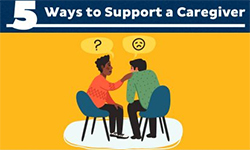
Being a family caregiver for a loved one with Alzheimer’s disease requires the caregiver to put the care recipient first, often to the detriment of their own health. Unfortunately, it is common for family caregivers to provide care without any support. It can be difficult to ask for help, especially for family caregivers who feel like it is their sole duty to look after their loved one. The best way to help a caregiver is to lighten their workload, allowing them to have a better quality of life.

Here are 5 ways you can support a caregiver:

  1. Run an errand. Take some of the load off a caregiver’s plate by offering to make a pharmacy or grocery store run. It may seem like an insignificant thing to do but this gesture could mean the world to an overwhelmed caregiver. One 15-minute store run could give them a precious window of time to relax or do something else.
  2. Provide a meal. This could be breakfast, lunch, dinner, a snack, or even a latte from their favorite coffee shop. Check in with the caregiver to confirm any dietary restrictions. You could cook or order a meal to be delivered. Also, providing frozen meals allows the caregiver to use them when convenient.
  3. Be a friend. Family caregivers are at a higher risk of feeling isolated and depressed. Providing emotional and social support is just as important as providing tangible support. A phone call or text message to check in and provide a listening ear may be just what someone needs to feel noticed and valuable.
  4. Help arrange respite care. Provide a way for the caregiver to have some free time away from their care recipient. Offer to personally provide care for an hour or even a day. If it’s in your ability (and if the caregiver agrees) you could hire an aide to provide care.
  5. Ask them. Although some needs are universal, every caregiver’s experience is unique. Whereas one caregiver may benefit from financial support, another may feel supported by having an accountability partner to help them manage their own health. The best way to know how to support a caregiver is to ask.

Posted on July 22, 2022

Walking Featured Image

Researchers have evidence that daily physical activity may reduce the risk of Alzheimer’s disease. You may be wondering if a certain method of physical activity is best. The American College of Sports Medicine (ACSM) and the Centers for Disease Control and Prevention (CDC) suggest that the method by which someone chooses to be physically active is not important when it comes to health of the brain and body; spending enough time being physically active should be the focus. This means that you should find something you like to do.

Do you like to dance? Do you prefer lifting weights? Team members of the PAAD-2 Study enjoy walking. Walking is a very simple and easy method of physical activity that has been shown to prevent the onset of Alzheimer’s disease.

Many studies have explored walking and Alzheimer’s disease. A study conducted at Washington VA Medical Center found that those who maintained an adequate level of fitness were 33% less likely to develop Alzheimer’s disease. This study followed a group of roughly 650,000 military veterans for nine years and concluded that those who were less physically active experienced dementia at a higher rate than those who were more physically active.

Let’s get outside and walk this week! An important aspect of walking is finding ways to enjoy the activity. You can walk with friends, family, pets, music, or a good podcast. Start out by walking a short period of time, for example, start with 10 minutes a day for 3 days this week. You can increase the minutes or the number of days as your body is ready. The main goal should be to walk often. Consistently being physically active is what may ultimately decrease your risk of Alzheimer’s disease.

Posted on July 26, 2022

Walking Featured Image

Walking is great for your health and the more you walk the easier it becomes to create a healthy habit of physical activity. Logging your walks can keep you accountable and help you see your progress. For example, by keeping track of your routine you may notice that a walking route that used to take you 30 minutes currently takes 25 minutes. Now that’s encouraging!

These days tracking your walking progress could not be easier. There are many ways to record your walking journey. Here are a few options to get you started:

1. Walking Apps. If you have a smartphone, there’s a high chance you already have a built-in walking tracker on your phone to count your steps. There are also dozens of fitness apps that will log your walking, such as Strava, MapMyWalk, and Nike Run Club. These apps are free to use and download but you can pay for upgrades if you’d like. Some of these apps also allow you to interact with other walkers in your community.

2. Pedometer. A pedometer, or step-tracker, is a device that keeps track of your steps. For around $10, you can find a pedometer that clips to your belt or one that can be worn like a watch. Smartwatch-style pedometers, such as Fitbit and Apple Watch, are more expensive but can also sync with apps on your phone to set walking goals and monitor your heart rate.

3. Walking Journal. Many people prefer to manually log their walking progress. You can set walking goals, make notes on how intense the walk was, or even how far you traveled. The fun thing about walking journals is that you can add details to them that you may not be able to add on a phone app or pedometer.

Download a free weekly walking log below and start tracking your walks today!