Posted on September 24, 2020

Walking Featured Image

As we explained last week, Apolipoprotein E (ApoE) is an influential genetic predictor of Alzheimer’s disease. This week, we share an important finding relative to ApoE that laid the foundation for the PAAD2 study. In this study, researchers tested aerobic fitness (a person’s capacity to perform aerobic activity) and cognitive performance (thinking abilities) in 94 cognitively normal, community-dwelling older women (average age = 62 years). They also categorized these women based upon their genetic risk for Alzheimer’s disease as being in the highest risk group (carriers of two copies of the epsilon 4 (e4) allele of ApoE), the moderate risk group (carriers of one copy of the e4 allele), or the low risk group. Importantly, results showed that women in the highest risk group with higher fitness also had better performance on memory tests. This suggests that improvements in fitness might be important for the maintenance of memory by older women with a genetic risk for Alzheimer’s disease (Etnier et al., 2007).

Find the full paper here!

Posted on September 29, 2020

Alzheimer's Featured Image

Alzheimer’s disease (AD) is not all the same. If you know more than one person with AD, then you are no doubt aware that the disease does not behave in precisely the same way in all people. At a broad level, people who begin to show symptoms before 65 years have early-onset AD while those who begin to exhibit symptoms at later ages (>65) are referred to as having late-onset Alzheimer’s disease. Additionally, patients can experience dramatically different symptoms including memory loss, depression, apathy, irritability, sleep disturbances, wandering, and psychosis. In a research study of AD patients, some had memory deficits as primary (27%), smaller numbers had language (8%) or spatial deficits (9%) as primary, and most did not have a clear primary deficit (56%) (Snowden et al., 2007).  This variation in effects across people is one of the challenges of AD in terms of diagnosis and treatment.

Check out this research here!

Posted on October 06, 2020

Genetic Featured Image

On this Tuesday News Day, we would like to share recent research from Drs. Sims, Hill, and Williams on the genetic predictors of Alzheimer’s disease. Although ApoE is the strongest genetic predictor of Alzheimer’s disease (AD), it is neither necessary nor sufficient for AD, and it is not predictive of disease progression. Thus, scientists are looking for additional genes that might be important. A recent review published in Nature Neuroscience (Sims, Hill, & Williams, 2020) describes that Alzheimer’s can be predicted more accurately using a combination of over 60 different genetic predictors. When these genes are examined simultaneously, scientists can accurately predict a future AD diagnosis or no future AD diagnosis for individuals who have extreme scores (calculated based upon this combination of genes). This is important for several reasons. First, it may support the use of precision medicine to identify those with a high genetic risk of AD at younger ages allowing for preventative treatment in advance of symptoms. Second, early symptoms associated with AD may be identified by observing individuals with and without a high genetic risk. Third, environmental factors that decrease or increase the risk of AD for individuals may be explored. This study highlights the incredible value of large-scale studies exploring genes and AD.

You can find the research article here!

Posted on October 15, 2020

Brain Food Featured Image

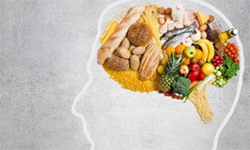
This week we’re looking back at the relationship between nutrition and cognition. In PAAD2, the Diet History Questionnaire III is being used to look at the role diet plays in the relationship between physical activity and cognitive performance. The PAAD2 team is not the first to wonder about the relationship between nutrition and cognition. In1983 Dr. James Goodwin led a study focused on this question. This team recruited 260 healthy adults over the age of 60. These participants each submitted 3-day food logs and had their blood drawn for testing. The participants also underwent a variety of cognitive tests. Results showed that participants with some nutritional deficiencies, as shown in the blood tests, scored worse on these cognitive tests, regardless of gender, level of income or education. It will be interesting to see how diet and nutrition plays a role in the results of PAAD2! Be sure to eat a healthy diet!

Read the article here!

Posted on October 13, 2020

PAAD2 Walkers Featured Image

“It is never too early and never too late in the life course for dementia prevention.”

That powerful statement comes from the Dementia Prevention, Intervention, and Care: 2020 Report of the Lancet Commission. The Lancet, a peer-reviewed, international medical journal, brought experts together to analyze research from around the world to identify risk factors for dementia. They also studied key timeframes in a person’s life for these risk factors.

Their report identifies 12 modifiable risk factors that account for up to 40% of dementias worldwide. In addition, the report indicates that these risk factors start in early life (younger than 45 years old) and continue through midlife (age 45 to 65 years old) and later life (over 65 years old).

The 12 modifiable risks factors for dementia include: low education, hearing loss, traumatic brain injury (TBI), hypertension, excessive alcohol consumption, obesity, smoking, depression, social isolation, physical inactivity, diabetes, and air pollution. On-going PAAD2 research in North Carolina focuses on the physical inactivity risk factor by looking at how physical activity affects cognitive skills in people with a family history of Alzheimer’s or dementia.

Regarding the physical inactivity risk factor, the Lancet report explains that exercise is a protective factor in midlife and possibly in later life but there are still many questions as to the relationship between exercise and cognitive health

We will discuss the other modifiable risk factors in upcoming posts! You can also read the full report here

Posted on October 20, 2020

Hearing Loss and Dementia Featured Image

Hearing loss may not be the first thing that comes to mind as a risk factor for developing dementia in later life, but many studies have shown a significant correlation between hearing loss and subsequent dementia. For example, one study cited by the Lancet Commission Report on Dementia found a decrease in cognition for every 10dB reduction in hearing. To put that into perspective, 10dB is the loudness of breathing, so this is a very subtle loss in hearing that is important for cognition.

Future study is needed to understand the exact relationship between hearing loss and dementia. Are the two problems related to a common physical problem, such as blood flow to the brain? Or, because a person can’t hear and understand others, do they gradually lose some mental abilities?

The good news is that the same Lancet Commission report referenced several studies that show use of hearing aids can protect people against this risk factor. One study that tested people every two years from age 50+ for 18 years found hearing aid use was the largest protective factor against cognitive decline.

In fact, evidence also shows that older adults with only slight hearing loss showed greater declines in cognition. Therefore, hearing loss is a very important risk factor to consider! We encourage you to speak with your physician if you have concerns about your own hearing.

If you’d like to dive deeper into the research, here is a study from the Journal of the American Medical Association.

Posted on October 22, 2020

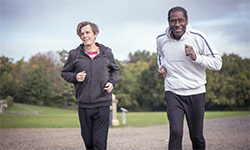
Running Featured Image

This week we’re looking at how people’s cognition changes as we age. Two important questions are when does aging start to affect our cognition and what does normal age-related cognitive decline look like? Dr. Timothy Salthouse and his team recruited over 2,000 research participants between 18 and 60 years of age with most rating their health as “very good” or “excellent”. Some of the participants were tested multiple times over 1 to 7 years, with an average of 2.5 years between tests. Salthouse and his team used tests that measured spatial visualization, memory, and perceptual speed. They found that as we age there is a normal decline in memory, reasoning, processing speed, and spatial visualization. However, a surprising conclusion was that certain aspects of cognition begin declining with age as early as in our 20’s or 30’s. Additionally surprising was the finding that as we grow older, our memory and ability to process information declines at a greater rate. In studying cognitive impairment related to Alzheimer’s disease, it is invaluable to better understand how our cognitive abilities normally change as we get older because this can be just a natural effect of aging.

You can find the article here!

Posted on October 27, 2020

Gut Health Featured Image

You have probably heard the phrase “you are what you eat”, but have you ever thought about what that really means? Basically, our stomachs hold a very high rank of importance in our bodies. Depending on how we treat it, our stomachs can either be the life of the party or the Debbie downer!

Our stomachs are filled with trillions of microorganisms. Microorganisms are bacteria in our stomach that can fall into 2 categories: the good bacteria (aka team life of the party) and bad bacteria (aka team Debbie downer). These microorganisms form our gut microbiome which is the culture or “mood” of our gut. In our gut microbiome, it is pretty much a majority rule type of society. This means our microorganisms can strengthen or weaken our stomach and digestive system depending on who’s in charge. When the bad microorganisms are in charge, they can create a leaky gut. This can lead to inflammation in the gut and other systems or organs in the entire body, including the brain. When there are more good microorganisms than bad, it decreases our risk for a long and dreary list of health issues, including Alzheimer’s disease.

Recently, Kowalksi and Mulak (2019) explained this link between our gut and Alzheimer’s disease. These findings provide a very good reason to adjust our eating habits in order to avoid that risk. Researchers are currently searching for potential benefits of healthier eating habits and how they may reduce the risk of Alzheimer’s disease because of the impact on gut microorganisms.

So far there is already research that shows value in the Mediterranean and MIND diets that include high levels of plant-based foods, probiotics (like yogurt), anti-oxidants (like blueberries, strawberries, kale), soybeans, nuts, and omega-3 polyunsaturated fatty acids (like fish, flaxseed, chia seeds, and walnuts). Following these dietary recommendations can help to keep your gut happy and in balance — and to potentially reduce your risk of Alzheimer’s disease!

You can read the full research article here!

Posted on October 29, 2020

World Stroke Day Featured Image

Have you ever wondered about the relationship between stroke and dementia? The Framingham study results showed that having a stroke doubled the risk of a participant being diagnosed with dementia. Although that is an intimidating statistic, the study also suggested that certain lifestyle changes can significantly decrease the risk of stroke which may also reduce the risk of being diagnosed with dementia.

To read more about dementia and stroke in the Framingham study, click the link here!

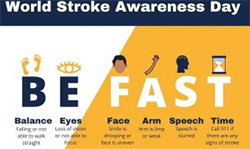
In observance of World Stroke Day, we want to remind our followers of the BE FAST method for remembering the warning signs if stroke. If you think someone is having a stroke, call an ambulance and note the time that the symptoms began. Share this with your friends so they are aware of the signs too!

Posted on November 03, 2020

Physical Activity Featured Image

This week’s Tuesday News Day describes recently published research from our Physical Activity and Cognition (PAC) Laboratory team members, Dr. Jennifer Etnier, Jarod Vance, and Aiko Ueno. Their article is titled Effects of Acute Exercise on Memory Performance in Middle-Aged and Older Adults. While the goal of the PAAD2 study is to see how chronic exercise influences cognition in people with a family history of Alzheimer’s disease, our PAC lab also engages in research examining how single bouts of aerobic exercise impact cognition more generally.

We sought to better understand how 20 minutes of aerobic exercise impacts short- and long-term memory and to see if the timing of the exercise is important. When asked to remember a list of words, we found that adults (aged 51-74 years) remember better in the short- and long-term (after 24 hours) if they perform 20 minutes of moderate intensity aerobic exercise.

Interestingly, when people exercised before hearing the list, they got the greatest benefits 24 hours later. But, if they exercised after hearing the list, they still got benefits compared to not exercising at all. So, even a single bout of aerobic exercise can have a positive impact on memory! While very exciting, there is so much more we need to learn about how exercise impacts cognition and our lab will continue to do so!