

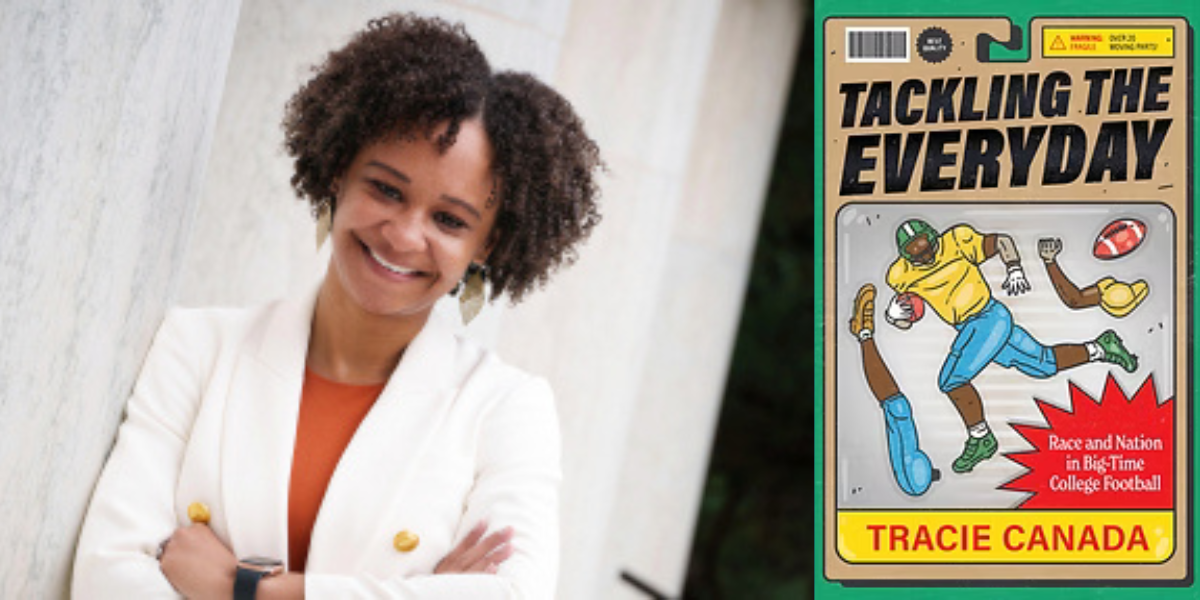
On February 20th, 2026, The UNCG Department of Kinesiology welcomed Dr. Tracie Canada for a thought-provoking colloquium centred on her book, Tackling the Everyday: Race and Nation in Big-Time College Football. A cultural anthropologist, ethnographer and assistant professor at Duke University, Dr Canada shared insights from her ethnographic research inside a Division I college football program, offering students and faculty a closer look at the lived experiences of Black college football players and the cultural structures that shape their daily lives.
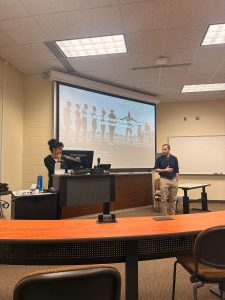
Dr. Canada discussed the origins of the book and the immersive fieldwork that informed it. Spending extensive time embedded within a major college football program, she observed team meetings, practices, travel, and the everyday interactions that define athletes’ experiences beyond the public spectacle of the sport. Through this work, Dr. Canada examined how race, identity, and institutional expectations intersect within college football, highlighting how athletes navigate pressures from coaches, universities, and the broader culture of big-time sport.
Throughout the presentation, Dr. Canada emphasized the importance of examining the “everyday” moments in sport. Those small interactions, routines, and conversations that often go unnoticed but shape athletes’ identities and experiences. By focusing on these moments, her research provides a deeper understanding of how systems of race and power operate within collegiate athletics.
During the discussion, students asked Dr. Canada a range of thoughtful questions about her research and its broader implications. Some questions focused on athletic identity, particularly whether athletes might feel culturally disconnected from football’s reputation as the “great American sport,” and how players navigate their identities within a system that carries strong national symbolism. Other students asked how the themes explored in her book might look different if the research were conducted at Historically Black Colleges and Universities (HBCUs), prompting conversation about how institutional culture, history, and community context could shape athletes’ experiences in ways that differ from predominantly white institutions.
The session concluded with continued informal conversations as students and faculty reflected on the intersections of sport, culture, and identity highlighted in Dr. Canada’s work. The event provided an engaging opportunity for the Kinesiology community to explore how qualitative research can deepen understanding of athletes’ lived experiences and inspire meaningful dialogue about the future of sport.
Want to learn more about Dr. Canada’s work, visit her webpage.