


PAC Lab Article Written By Brittany Armstrong
Alzheimer’s disease is the most common form of dementia. It affects memory, thinking, and daily functioning. A key feature of this disease is the buildup of plaques and tangles in the brain, which interfere with normal brain function. But what exactly are these plaques and tangles, and why do they matter?
What Are Plaques?
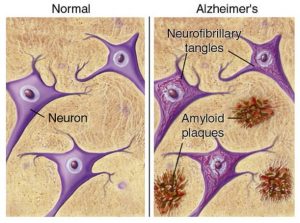
Beta-amyloid is a protein found in the fatty membrane surrounding nerve cells. In a healthy brain, beta-amyloid is cleared away regularly, but in Alzheimer’s disease, it accumulates and forms sticky plaques. These plaques build up between nerve cells in the brain and disrupt communication between cells.
What Are Tangles?
Tau is a protein found in the brain that helps transport nutrients along pathways within brain cells. In a healthy brain, tau helps keep the pathways straight, but in Alzheimer’s disease, tau clumps into twisted strands, forming tangles. These tangles cause nutrients to no longer move through the pathway which leads to cell death and disintegrating pathways.
How Do Plaques and Tangles Affect the Brain?
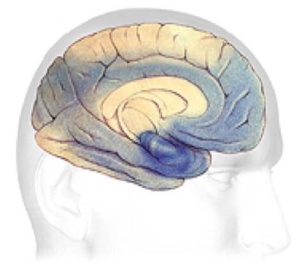
Plaques and tangles block communication between brain cells and cause brain cells to die. In the early stages of Alzheimer’s disease, plaques and tangles may not cause detectable symptoms of memory loss. In mild to moderate stages, they cause memory loss, confusion, difficulty with problem-solving, and personality changes. As more plaques and tangles accumulate, symptoms worsen.


Can We Prevent Plaques and Tangles?
While there is currently no cure for Alzheimer’s, research suggests that lifestyle changes may help reduce the risk cognitive decline. These lifestyle changes include keeping the brain active (e.g., puzzles), following a brain-healthy diet (e.g., fruits and vegetables), interacting with others, and managing health conditions (e.g., controlling blood pressure).

